Link Building for iGaming: Channels That Still Work
Link Building for iGaming: Channels That Still Work
iGaming link building is a restricted-supply market. Most publishers reject casino, sportsbook, poker, and betting topics. The sites that accept them charge more, sell faster, and often mix too many commercial verticals on the same domain. That is why generic outreach plans fail in this niche.
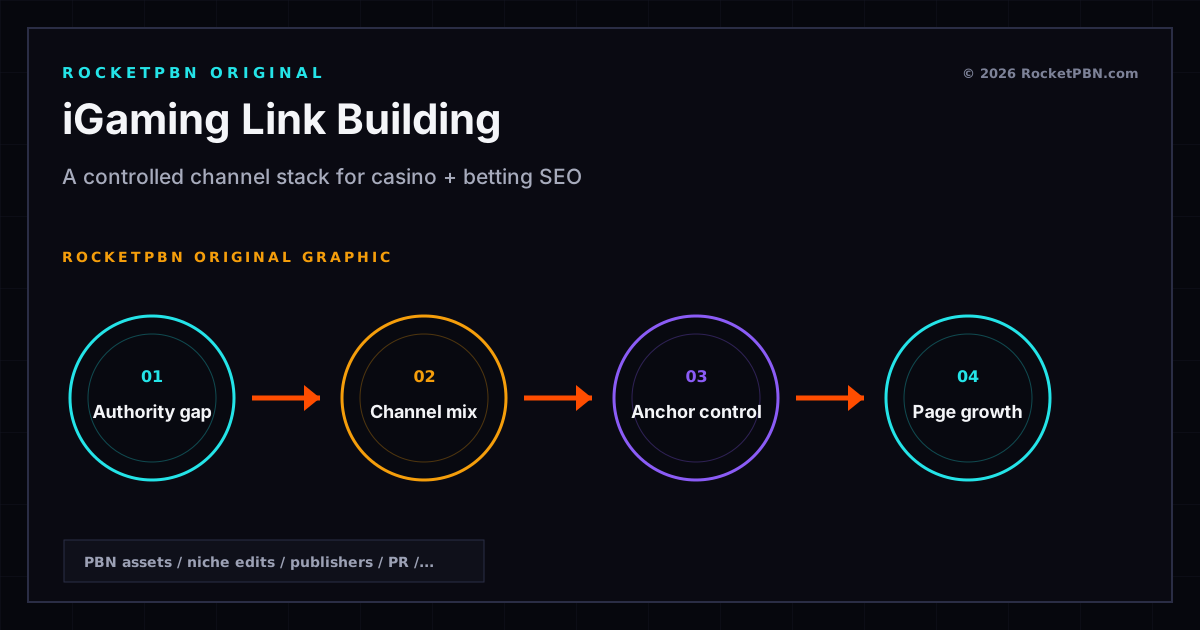
The operators who win do not depend on one link type. They build a controlled stack: aged domains for ownership and anchor precision, niche edits for page-level authority, gambling-friendly publishers for topical context, digital PR for brand legitimacy, and tier 2 links to strengthen assets that already pass review.
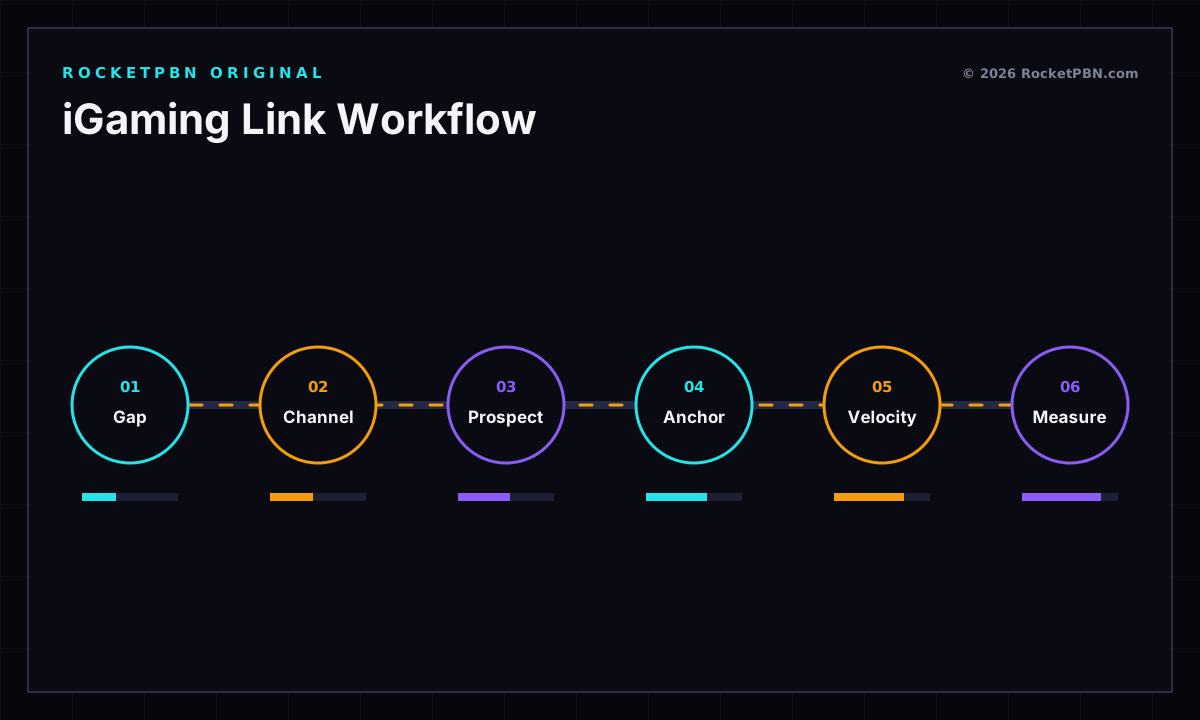
This guide gives you the working channel mix, price ranges, anchor rules, velocity model, prospect checks, and expired-domain strategy for iGaming campaigns. The point is not to collect links. The point is to decide which links deserve budget, which ones need support, and which ones should be rejected before they damage the profile.
Why Is iGaming Link Building Harder Than Normal SEO?
iGaming link building is harder because publisher supply is restricted, competitor authority is high, anchors are more commercially sensitive, and GEO relevance matters. A casino campaign pays more for the same DR range because fewer real publishers accept gambling placements.
Publisher Supply Is Restricted
Most general publishers refuse gambling content. Some reject every casino term. Others accept sports content but refuse betting anchors. Many marketplaces list gambling-friendly domains, but the inventory often includes sites that also sell CBD, loans, crypto, and adult placements. That mix weakens topical trust and increases outbound-link risk.
The same DR 50 site that sells a SaaS article for $250 may quote $700 for a casino placement, reject exact anchors, or require vague brand language. Supply is not just smaller; it is harder to qualify.
Competitors Already Have Authority
Casino and sportsbook SERPs are mature. Page-one affiliates often have aged domains, hundreds of referring domains, strong internal link systems, and years of anchor history. A new site cannot close that gap with generic guest posts or directory submissions.
The campaign must build authority in layers: branded foundation, topical relevance, page-level power, and controlled commercial anchors.
GEO and Compliance Shape Link Fit
A UK betting guide, Canadian casino review, and Brazilian sportsbook page need different language, publisher context, and local relevance. A link from an irrelevant market can still pass equity, but it may not support trust or conversion. Strong iGaming campaigns map links by target country, page type, and anchor posture before buying placements.
Which Link Building Channels Should iGaming Campaigns Use?
iGaming campaigns should use a mixed channel stack: expired-domain PBN assets for control, niche edits for existing page authority, sponsored posts for topical context, digital PR for trust, directories for foundation, and tier 2 links for amplification. No single channel should carry the whole profile.
Channel Decision Grid
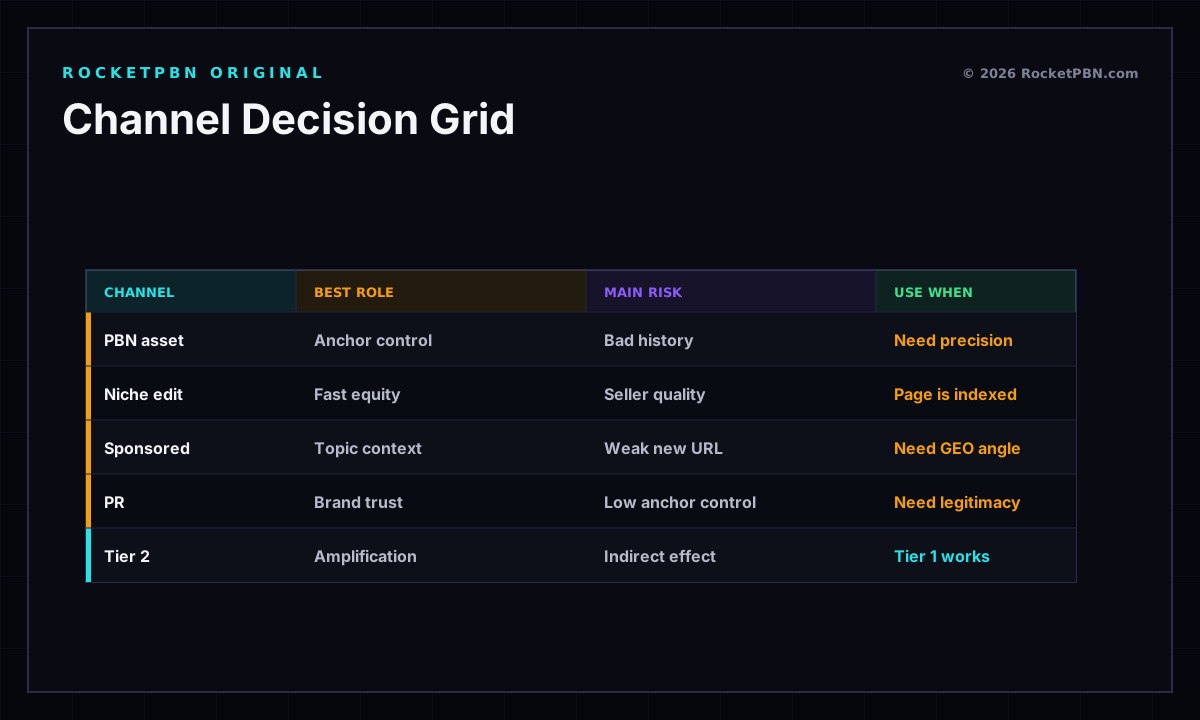
Use channels by role. A PBN domain is not a guest post substitute. A niche edit is not a brand signal. Digital PR rarely gives anchor control. The mix matters because each channel solves a different constraint.
| Channel | Best role | Main risk | Use when |
|---|---|---|---|
| Expired-domain PBN | Anchor control and topical authority | Bad domain history | You can vet and rebuild assets |
| Niche edits | Fast page-level equity | Seller quality varies | The exact page is indexed and linked |
| Sponsored posts | New topical context | New URL starts weak | You need a specific topic or GEO |
| Digital PR | Brand and trust signals | Low anchor control | The site needs legitimacy signals |
| Casino directories | Foundational relevance | Low authority ceiling | You need safe baseline citations |
| Tier 2 links | Strengthen tier 1 pages | Indirect effect | Tier 1 pages already passed review |
What No Longer Carries Campaigns Alone
Forum profiles, low-quality directories, mass comments, spun guest posts, and generic Web 2.0 pages do not carry competitive gambling terms. They can support discovery or tier 2 layers, but they do not replace authoritative, relevant referring domains.
Cheap volume also creates analysis noise. If 200 weak links hide the 20 links that matter, measuring campaign impact becomes harder.
Why Expired Domains Stay Central
Expired domains stay central because they create ownership. You control content, anchors, link timing, internal links, and rebuild direction. In iGaming, where third-party publisher supply is expensive and inconsistent, controlled assets let operators deploy relevance on demand.
That control only works when the domain is clean. Aged authority with unrelated history, commercial anchor pollution, or weak Topical Trust Flow should not enter a tier 1 campaign.
How Should iGaming Campaigns Use Expired Domains and PBNs?
iGaming campaigns should use expired domains as controlled authority assets, not disposable link shells. The strongest setup rebuilds sports, gambling, poker, racing, or betting-adjacent domains with relevant content, waits for indexing, then places contextual links at measured velocity.
Domain Selection Rules
Pick domains that can explain the target page naturally. Casino campaigns need gambling, poker, gaming, entertainment, or review history. Sportsbook campaigns can use sports news, racing, football, tennis, esports, and prediction domains. Finance or news domains can work only when the content bridge is defensible.
| Metric | Tier 1 floor | Reject signal |
|---|---|---|
| DR | 35+ | High DR with very few real referring domains |
| Trust Flow | 18+ | TF below 10 or weak TF:CF ratio |
| TF:CF ratio | 0.5+ | Citation Flow inflated far above trust |
| Referring domains | 20+ clean RDs | One-link dependency |
| Topical Trust Flow | Gambling, Sports, Games, News | Unrelated dominant category |
| Wayback history | 2+ years relevant content | Long gaps, parked pages, niche flips |
Rebuild Rules
Do not launch a thin site and link out immediately. Publish enough topical content to make the site look like a continuation of its history. A sports domain should publish sports previews, match analysis, racing content, or betting education. A poker domain should publish poker strategy, tournament commentary, or card-game explainers.
Place the first money link only after the rebuilt site is indexed and has a real internal structure. Fast deployment may work once. Repeating fast deployment across every domain creates a campaign pattern.
Link Placement Rules
Use contextual links inside relevant articles. Avoid sidebars, sitewide blocks, and unrelated money links. One commercial link per article is usually enough. Pair every PBN link with surrounding topical paragraphs, internal links, and natural anchors.
For the full build process, use How to Build a PBN as the operational reference.
What Role Do Niche Edits and Sponsored Posts Play in Gambling SEO?
Niche edits provide speed when the page already has authority, while sponsored posts provide controlled context on a new URL. Gambling campaigns need both, but each placement must be qualified at page level before price matters.
When Niche Edits Work
Niche edits work when the existing page is indexed, topically related, and already has backlinks or traffic. A link inserted into a live sports betting guide can pass value faster than a new guest post because the URL has history.
Reject niche edits when the page topic is unrelated, the article has too many outbound links, or the seller inserts casino links into any page that accepts payment. Relevance has to be visible before the link is added.
When Sponsored Posts Work
Sponsored posts work when you need a fresh topic, local compliance angle, or specific comparison page. They are useful for market-entry content: payment methods, betting regulations, operator comparisons, casino bonuses, and sports event guides.
Their weakness is URL authority. A new post can sit three clicks deep with no internal links and no external links. Ask how the publisher links new articles before paying.
Niche Edit vs Sponsored Post Decision
| Need | Better channel | Reason | Watch |
|---|---|---|---|
| Fast authority | Niche edit | Existing URL equity | Page relevance |
| Exact topic control | Sponsored post | Custom article angle | Weak new URL |
| GEO localization | Sponsored post | Local language and market framing | Publisher country |
| Existing ranking page | Niche edit | Page already indexed | Outbound link load |
| Brand-safe context | Sponsored post | You control surrounding copy | Disclosure policy |
How Should You Build Anchor Text for iGaming Links?
iGaming anchor text should start with branded and URL anchors, then add partial-match anchors after the site has authority. Exact-match anchors should be limited, page-specific, and reserved for highly relevant sources with clean histories.
Anchor Mix by Campaign Stage
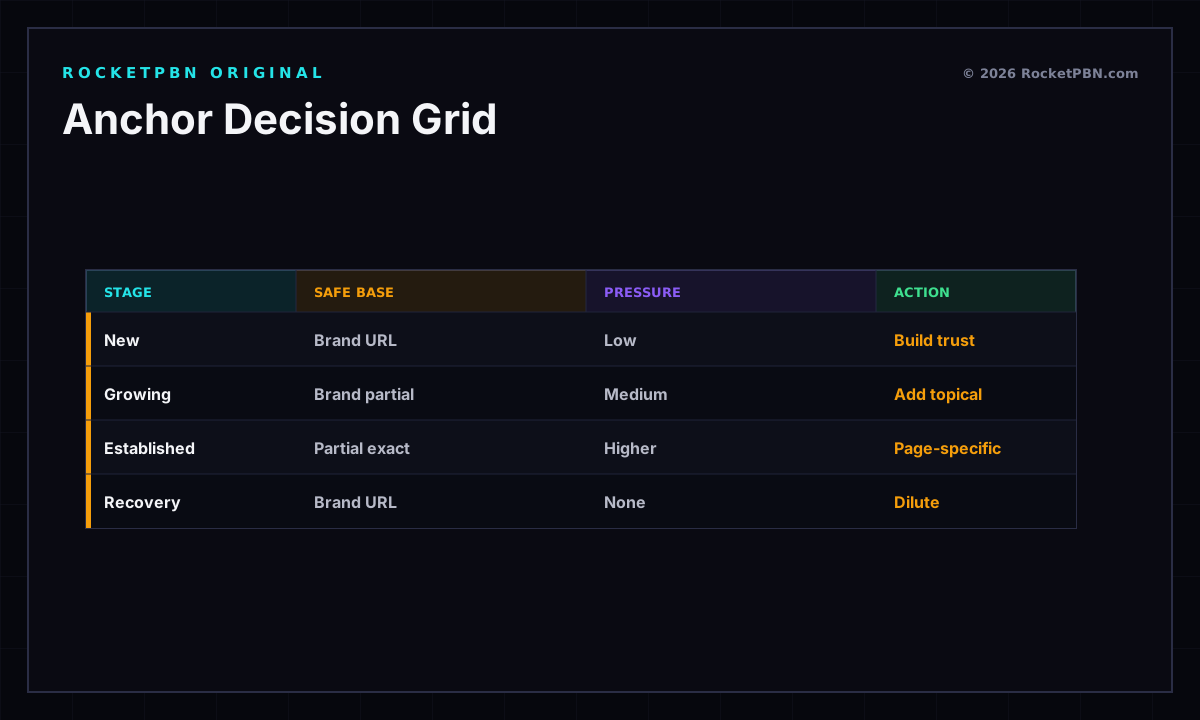
Anchor ratios should follow campaign stage, not a universal percentage. New sites need trust and brand signals first. Established sites can absorb more partial anchors when the source and destination page are tightly related.
| Campaign stage | Branded/URL | Partial match | Exact match | Operator note |
|---|---|---|---|---|
| New site | 75% | 20% | 5% | Build trust first |
| Growing site | 60% | 30% | 10% | Add topical pressure |
| Established site | 50% | 35% | 15% | Use page-specific anchors |
| Recovery mode | 85% | 15% | 0% | Dilute over-optimized terms |
For a new casino affiliate, anchors like brand name, URL, casino guide, betting site review, and sportsbook comparison are safer than repeating exact commercial terms.
Anchor by Source Type
Use tighter anchors on stronger, more relevant sources. A rebuilt gambling domain can support a partial-match anchor because the surrounding site context helps explain it. A general publisher should usually use branded or broad topical anchors.
Exact anchors from weak sources are a poor trade. They create risk without enough relevance to justify the pressure.
Anchor by Page Type
Homepage links should be mostly branded and URL. Category pages can take broad topical anchors. Commercial review pages can take selective partial anchors after branded authority exists. Exact anchors belong on pages that already have a balanced profile and enough supporting content.
What Link Velocity Works for Casino and Betting Sites?
Link velocity should match the site's age, current referring-domain base, content output, and brand signals. New iGaming sites should build slowly for the first 90 days. Established sites can absorb more links when new content and PR activity support the growth.
Velocity Benchmarks
| Site profile | Monthly new RDs | PBN share | Anchor posture |
|---|---|---|---|
| New site, DR 0-15 | 5-12 | 20-30% | Mostly branded |
| Growing site, DR 15-35 | 15-30 | 30-40% | Broad partials |
| Established site, DR 35-55 | 30-70 | 35-45% | Page-specific |
| Competitive leader, DR 55+ | 70+ | 25-40% | Mixed with PR |
Velocity should not be a straight line. Real link growth changes with content launches, publisher timing, event coverage, and PR spikes.
Content Must Support Velocity
Adding links to thin pages creates a mismatch. Publish review methodology, responsible gambling pages, local market explainers, payment pages, comparison pages, and sports event content before accelerating link acquisition.
Links work better when the destination looks worth citing.
Slowdown Triggers
Slow the campaign when exact anchors climb too quickly, several placements come from similar sites, rankings drop after a burst, or new links index without improving impressions. A slower campaign can accelerate later. A messy profile is harder to unwind.
How Do You Qualify iGaming Link Prospects Before Paying?
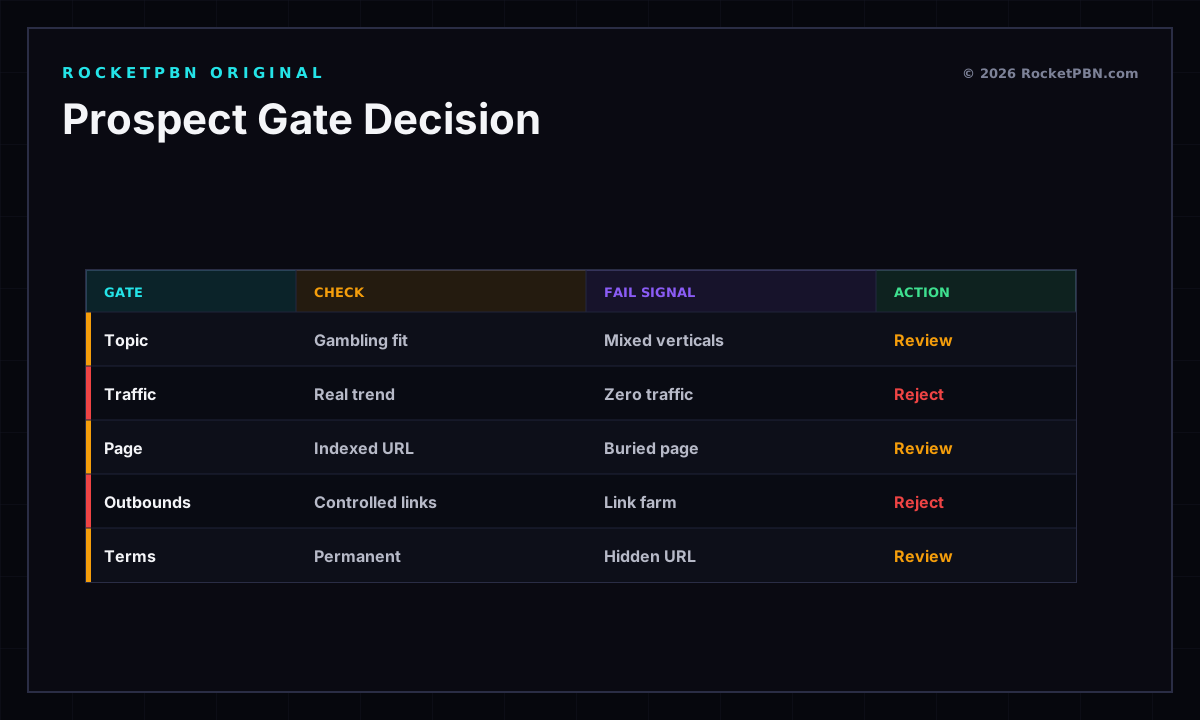
Qualify prospects by checking topical relevance, organic traffic, outbound-link behavior, gambling acceptance history, GEO fit, page-level authority, index status, and anchor context. Domain-level DR is only the first filter; page quality decides whether the link is useful.
Site-Level Checks
Open the domain in Ahrefs, Semrush, or a comparable link tool. Check traffic trend, top pages, ranking countries, referring domains, outbound link patterns, and recent posts. A DR 60 site with no traffic and hundreds of paid outbound links is weaker than a DR 35 sports site with real rankings and clean topical focus.
If the site sells casino, CBD, loans, crypto, and adult placements in the same feed, treat it as inventory, not editorial authority.
Page-Level Checks
For niche edits, inspect the exact URL. Is it indexed? Does it rank? Does it have backlinks? Is the topic close to your target page? A strong domain with a weak page can underperform a weaker domain with one powerful indexed URL.
For sponsored posts, ask how new articles are internally linked. A page buried without internal links may not be crawled often enough to matter.
Commercial Checks
Confirm price, turnaround, link permanence terms, editing policy, whether gambling anchors are allowed, and whether the publisher marks sponsored content. Avoid vendors that refuse to show URLs before payment unless the relationship is already trusted.
What Budget Should iGaming Operators Expect for Links?
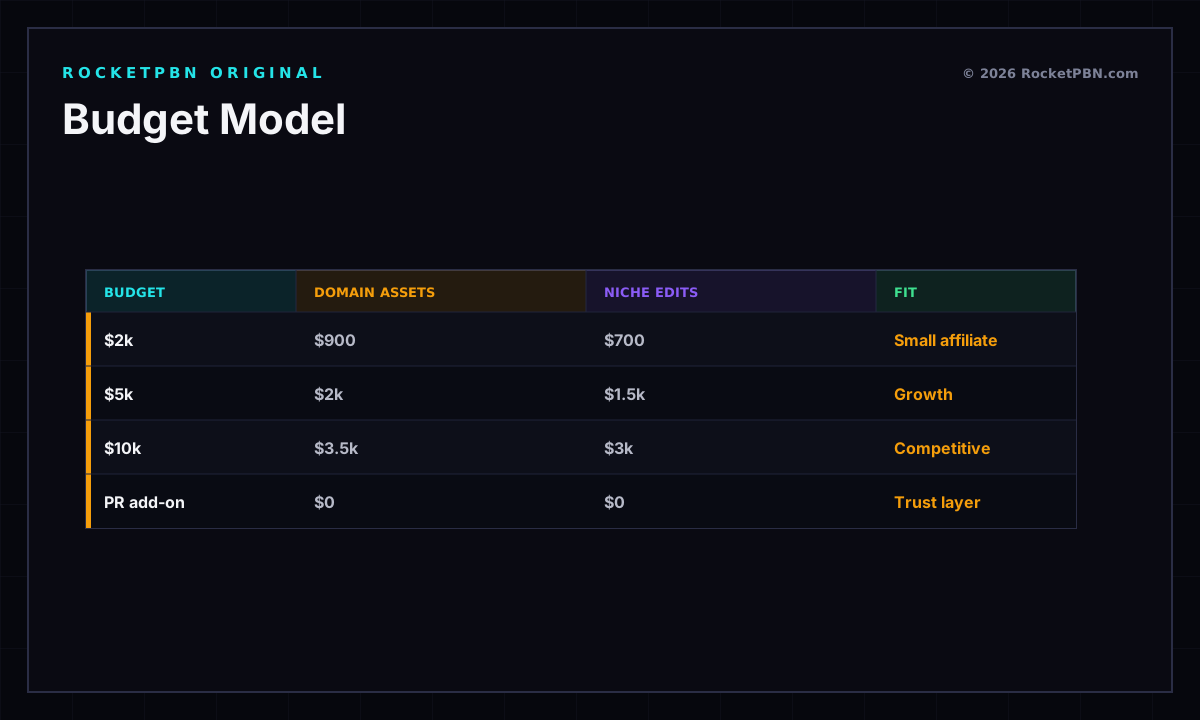
Competitive iGaming link budgets usually start around $2,000 to $5,000 per month for smaller affiliates and scale beyond $10,000 for serious casino or sportsbook campaigns. The budget must cover domains, content, hosting, niche edits, sponsored posts, and tier 2 support.
Monthly Budget Model
| Monthly budget | Domain/PBN assets | Niche edits | Sponsored posts | PR/tier 2 | Fit |
|---|---|---|---|---|---|
| $2,000 | $900 | $700 | $300 | $100 | Small affiliate |
| $5,000 | $2,000 | $1,500 | $1,000 | $500 | Growth campaign |
| $10,000 | $3,500 | $3,000 | $2,000 | $1,500 | Competitive GEO |
The split should change by stage. Early campaigns need foundation and branded authority. Mid-stage campaigns need page-specific links. Mature campaigns need high-trust placements, publisher diversity, and PR signals.
Cost Per Useful Link
Cheap links are not cheap if they do not move rankings. In gambling, a useful link often costs more because supply is restricted. A $400 niche edit that supports a money page is cheaper than ten $40 links that create no measurable movement.
Track movement by page, not by number of links purchased.
Domain Asset Economics
Expired domains have upfront cost, but the asset can support multiple placements over time if maintained as a real site. A $700 domain plus content and hosting can serve a campaign for years. That is why owned assets remain attractive compared with renting every link from third-party publishers.
For sourcing rules, start with Expired Domains for SEO and then adapt the filters to gambling relevance.
What iGaming Link Building Plan Should a New Affiliate Use First?
A new iGaming affiliate should start with branded foundation links, a small set of topically aligned domain assets, selective niche edits, and conservative anchors. The first 90 days should create trust and indexation signals before pushing commercial pages aggressively.
First 90 Days
- Publish core trust pages: about, contact, methodology, responsible gambling, privacy, terms, and review criteria.
- Build foundational citations and branded links.
- Acquire or reserve 2-4 clean aged domains that match the target niche.
- Rebuild each domain with 10-15 topical posts.
- Buy a small number of niche edits only on indexed, relevant pages.
- Keep anchors mostly branded, URL, and broad topical.
Days 90 to 180
Add page-level links to commercial pages only after impressions and indexing are stable. Use partial anchors from stronger sources, publish supporting informational content, and strengthen the best tier 1 pages with tier 2 links.
This is the stage where PBN assets become useful. They can fill anchor gaps that outreach cannot solve.
Mature Campaigns
Mature campaigns need publisher diversity, PR signals, and deeper topic clusters. PBN links should support specific commercial pages, not dominate the entire profile. Monitor PBN share by page and by domain. If one page depends too heavily on owned assets, add publisher links or internal authority before increasing exact-match pressure.
Frequently Asked Questions
What is the best link type for iGaming SEO?
The best link type depends on campaign stage. Expired-domain PBN links provide control and anchor precision. Niche edits provide faster page-level authority. Sponsored posts provide topical context. Digital PR provides brand trust. Competitive iGaming campaigns need a mixed stack because no single channel solves authority, relevance, and trust at the same time.
Are guest posts effective for casino SEO?
Guest posts are effective when the host site is topically relevant, indexed, and willing to publish gambling content without isolating the page. They are weak when the post has no internal links, no traffic, and no topical connection. Treat guest posts as context builders, not automatic authority links.
How many links does an iGaming site need?
A new affiliate may need 50 to 150 quality referring domains to compete in moderate SERPs. Competitive casino and sportsbook pages often require hundreds. The real number depends on competitor authority, page quality, GEO, keyword value, and topical coverage. Benchmark page-one competitors before setting targets.
Should iGaming sites use PBNs?
Many iGaming operators use PBNs because publisher supply is restricted and anchor control matters. The deciding factor is quality. A network built on clean, topically aligned expired domains with real content can support campaigns. A thin network built on random domains creates weak signals and operational risk.
What anchors are safest for betting links?
Branded, URL, and broad topical anchors are safest. Partial-match anchors become useful after the site has authority and the linking source is relevant. Exact-match betting anchors should be limited to strong pages from topically aligned sources. Anchor text should follow the page's current profile, not a generic formula.