Expired Domains for SEO: Complete 2026 Guide
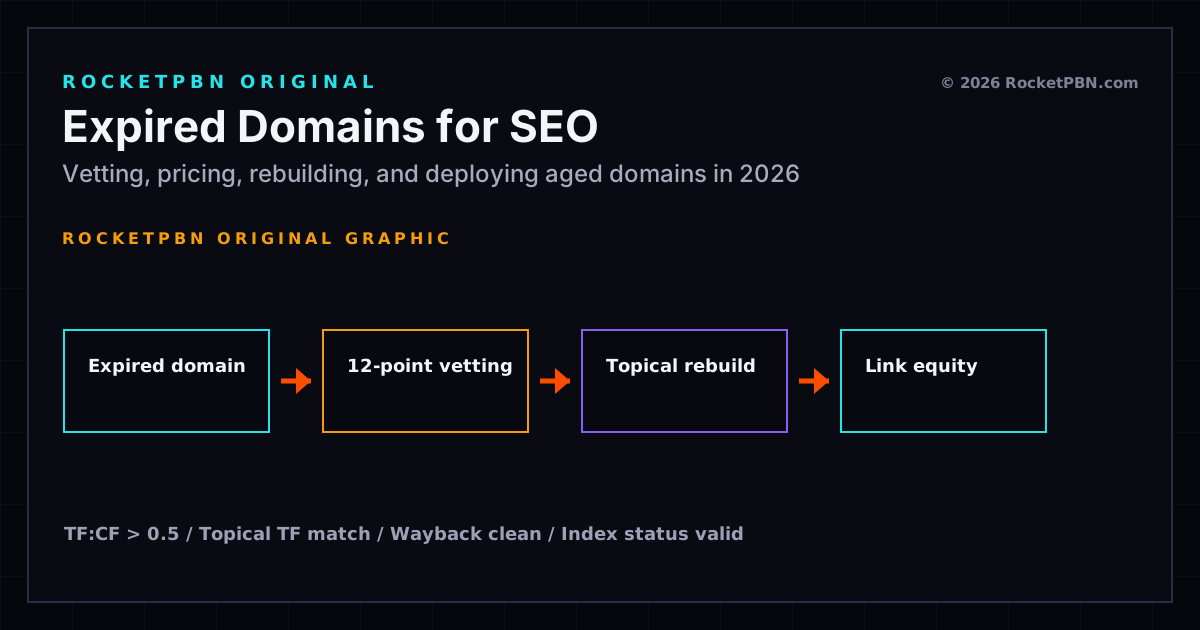
Expired Domains for SEO: Complete 2026 Guide
Expired domains still work in SEO, but only when the domain's old authority, old topic, backlink quality, and new use case line up. The market has changed. Buying a DR 45 domain, publishing five thin posts, and pointing exact-match anchors at a money page is no longer a serious operating model. It leaves too many detectable gaps: weak content continuity, mismatched topical trust, unnatural anchor timing, and no reason for the rebuilt site to exist.
The useful version of expired domain SEO is more disciplined. You buy domains with clean link history, rebuild them in the same topical lane, verify Trust Flow and Topical Trust Flow, keep hosting and publishing patterns natural, then use the asset for PBN support, 301 tests, brand acquisition, or authority acceleration. The domain is not magic. It is an old entity with inherited signals, and those signals need a coherent second life.
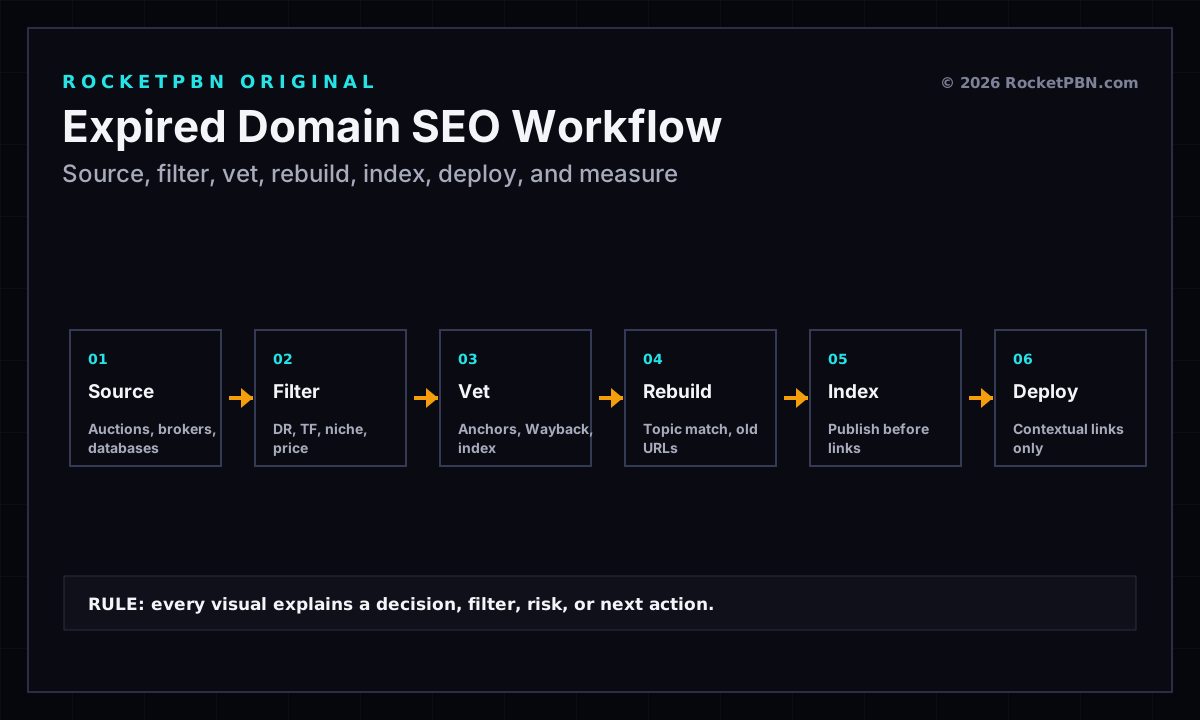
This guide covers the full operator workflow: what expired domains are, when they pass value, where to buy them, how to price them, how to vet them, how to deploy them, and what risks matter in 2026. The goal is simple: help you buy fewer bad domains and deploy the good ones with a plan.
What Are Expired Domains and Why Do SEO Operators Buy Them?
Expired domains are previously registered domains that were not renewed and became available for purchase again. SEO operators buy them because some retain backlinks, authority signals, topical history, and brand trust that would take months or years to build from a new registration.
The Practical Definition
An expired domain is not just an available name. It is a domain with a previous life. That previous life may include editorial backlinks, indexed content, brand mentions, anchor text history, referring domains, social references, and topical associations in tools like Majestic, Ahrefs, and Moz.
The SEO value comes from the old link graph. If real sites still link to the domain, and those links point from relevant pages, the domain may retain authority after re-registration. The authority is strongest when the new site continues the same topical direction as the old site.
Why Operators Prefer Aged Assets
A new domain starts with no meaningful authority. It needs content, links, crawl history, and trust signals. An aged expired domain can shorten that timeline because part of the authority infrastructure already exists.
For a PBN operator, that means a rebuilt domain can become a useful link source faster than a fresh registration. For an affiliate operator, it can support a money site through contextual links. For a brand buyer, it can provide a name with existing citations and niche memory.
The Main Use Cases
Expired domains are usually deployed in four ways.
| Use case | What happens | Best fit | Main risk |
|---|---|---|---|
| PBN rebuild | Build a real niche site and link out later | Operators needing anchor control | Thin rebuild patterns |
| 301 redirect | Redirect the old domain to a related site or page | Brand merger or exact topical match | Weak relevance transfer |
| Brand acquisition | Relaunch the domain as a standalone asset | Niche site builders and investors | Overpaying for weak metrics |
| Tiered support | Use the domain to strengthen other owned assets | Network builders | Poor tier mapping |
The best use case depends on the domain. Do not decide deployment before reviewing history.
How Does Google Treat Expired Domains in 2026?
Google does not reset every signal when a domain expires, but it does evaluate whether the new use creates value or mainly exploits the old reputation. Domains rebuilt with topical continuity and real content behave differently from domains repurposed with low-value pages.
What Changed After Expired Domain Abuse Became Explicit
Google's spam documentation now explicitly describes expired domain abuse: buying an expired domain and repurposing it mainly to manipulate rankings with content that provides little value. The examples matter because they show the core pattern: old reputation, unrelated new topic, low-value content.
That does not mean every expired domain use is treated the same. A former football publication relaunched as a sports analysis site has a coherent story. A former school site rebuilt as a review-site bonus hub has a weak story. The difference is topical continuity and user value.
What Still Passes Value
Value tends to pass when four conditions are present:
- The old backlinks are still live and from real pages.
- The old topic matches the new topic.
- The rebuilt site has enough content depth to look like a real publisher.
- Link placement happens after the site is indexed and stable.
This is why expired domain SEO is no longer a pure metrics game. The link graph matters, but the new site has to support the old entity.
What Gets Discounted
Domains get discounted when the history is incoherent. Long parking gaps, unrelated niche flips, foreign-language anchor contamination, link spikes, doorway pages, and thin relaunches all weaken the case for inherited value.
The more competitive the niche, the less tolerance there is for weak signals. restricted-niche, finance, health, legal, and other restricted or high-value niches require stricter filtering.
What Types of Expired Domains Should You Understand Before Buying?
You need to distinguish expired, dropped, aged, auctioned, and closeout domains because each source has different pricing, quality, and competition. The name may be available, but the acquisition path changes how much diligence and budget discipline you need.
Expired Versus Dropped Domains
An expired domain has entered the renewal or expiry process. It may still be recoverable by the old owner during a grace period. A dropped domain has completed the deletion cycle and returned to general availability or a drop-catching process.
Dropped domains can be cheaper, but the strongest names are often caught immediately by automated services. If a strong domain sits unregistered for a long time, ask why.
Aged Domains
Aged domains are domains with registration history, backlink history, or both. Not every aged domain is expired. Some are privately sold while still active. These can be cleaner because they avoid long downtime, but they are usually more expensive.
For SEO, aged is only useful when the age includes real activity. A 12-year-old parked domain with no links is not equivalent to a 6-year-old niche publication with 70 referring domains.
Auctioned Domains
Auctioned domains appear on platforms before or during expiry. They attract more competition because metrics are visible and acquisition is straightforward. The benefit is access. The downside is price.
| Type | Typical price | Quality range | Best buyer |
|---|---|---|---|
| Dropped registration | $10-$80 | Low to mixed | Testers and hunters |
| Closeout | $20-$250 | Mixed | Budget operators |
| Auction | $200-$3,000+ | Mixed to high | Fast vetting teams |
| Private aged domain | $500-$10,000+ | High variance | Serious operators |
| Brokered pre-vetted domain | $300-$3,000+ | Higher floor | Buyers paying for saved time |
The acquisition path does not prove quality. It only changes the probability and price.
Where Should You Buy Expired Domains for SEO?
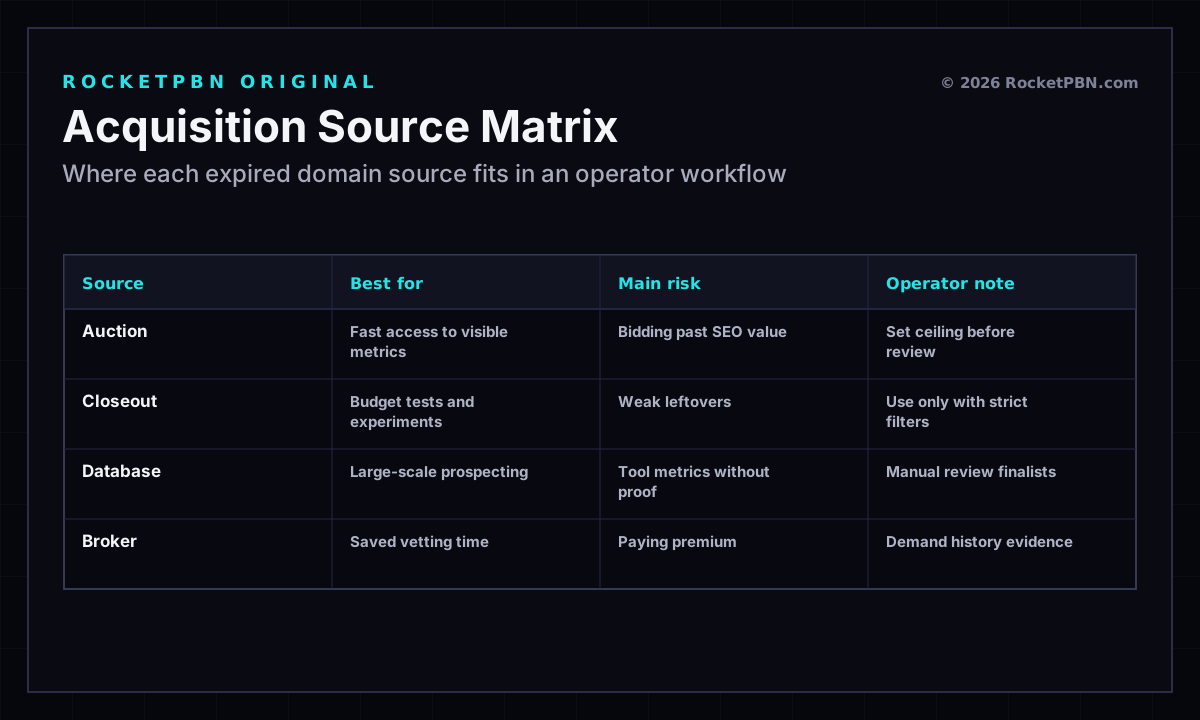
Buy expired domains from auctions, closeouts, drop catchers, expired domain databases, private sellers, or brokers. The best source depends on your skill level: auctions reward speed, databases reward volume filtering, and brokers reward buyers who prefer pre-vetted inventory.
Auctions and Closeouts
GoDaddy Auctions, NameJet, Sedo, Dynadot, DropCatch, and similar marketplaces expose domains during expiry, closeout, or competitive catch periods. These sources are useful when you can vet quickly.
The problem is visibility. If a domain has obvious DR, TF, and niche keywords, other buyers see the same signals. Auction pricing can become efficient fast, especially for review-site, regulated, finance, and health domains.
Databases and Research Tools
Tools like SpamZilla, ExpiredDomains.net, DomCop, Ahrefs, Majestic, and Semrush help filter large lists. They are not final decision tools. They are triage systems.
Use them to reduce volume, then manually inspect finalists. A list of 5,000 domains should become 100 candidates, then 15 serious reviews, then maybe 1 to 3 purchases.
Brokers and Private Marketplaces
Brokers are useful when time matters more than raw acquisition cost. A good broker rejects bad inventory before you see it and provides key metrics: DR, TF, CF, Topical Trust Flow, referring domains, Wayback history, anchor summary, price, and niche fit.
The premium is justified when you buy a few domains per month and cannot spend hours vetting every candidate. For operators buying 20 or more per month, building an internal sourcing workflow may be cheaper.
For inventory that has already been screened for SEO use, start with Browse pre-vetted aged domains ->.
How Do You Evaluate an Expired Domain Before Purchase?
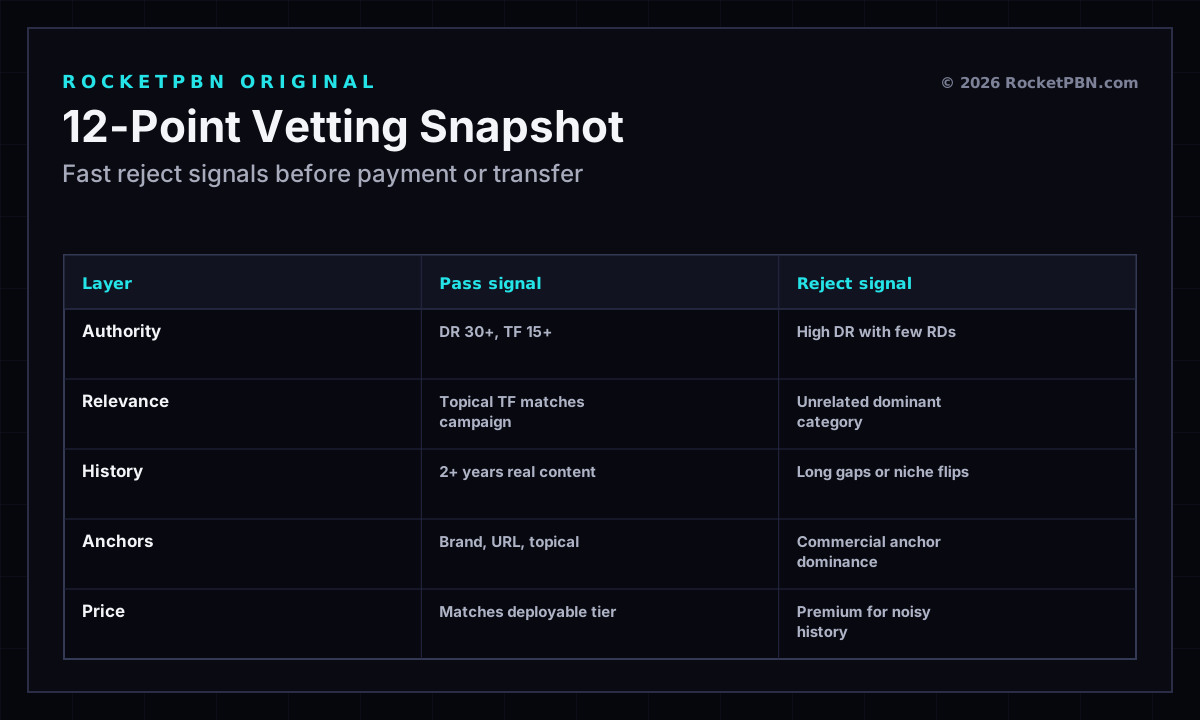
Evaluate an expired domain by checking authority metrics, referring domains, Trust Flow, Topical Trust Flow, anchor history, Wayback continuity, index status, language fit, outbound links, and price. Never buy from DR alone because DR can hide weak relevance or spam history.
The 12-Point Vetting Checklist
Use the same order every time. Consistency prevents emotional buys.
| Check | Passing benchmark | Reject signal |
|---|---|---|
| DR | 30+ tier 2, 40+ tier 1 | High DR with very few RDs |
| Referring domains | 15+ clean RDs | One-link dependency |
| Trust Flow | 15+ minimum, 20+ preferred | TF below 10 |
| TF:CF ratio | 0.5+ preferred | Below 0.3 |
| Topical Trust Flow | Matches campaign | Unrelated dominant category |
| Anchor text | Brand, URL, natural topical | Commercial anchor dominance |
| Wayback history | 2+ years real content | Long gaps or niche flips |
| Index status | Some index footprint or explainable blank | Clear deindex pattern |
| Language | Matches target market | Heavy foreign mismatch |
| Outbound links | Normal editorial pattern | Links to blacklisted spam sites |
| Link trend | Stable or natural decay | Artificial spike and collapse |
| Price | Matches quality tier | Premium price for noisy history |
This checklist should be run before payment, not after transfer.
Why Topical Trust Flow Is the Deciding Layer
Topical Trust Flow explains the subject of trust. A domain with Sports or regulated-market trust is more valuable for regulated than a stronger generic domain with Shopping or Society trust. The score tells you what the old link graph was about.
For a deeper metric breakdown, use Domain Authority Metrics Explained and Expired Domain Evaluation Checklist.
How to Read History
Open Wayback snapshots across multiple years. Look for a real site, real navigation, consistent topic, and content that matches the link profile. Then compare the top linked pages in Ahrefs. If the best backlinks point to old URLs you can rebuild, the domain becomes more useful.
If Wayback shows a legitimate site in 2018, parking in 2019, review-site spam in 2020, foreign-language redirects in 2021, and another drop in 2023, the metrics are contaminated.
What Price Should You Pay for Expired Domains?
Expired domain pricing should follow deployable authority, not headline metrics. In 2026, practical SEO pricing often ranges from $100-$250 for DR 20-30 tests, $300-$800 for DR 35-45 assets, and $1,000+ for clean DR 50+ domains.
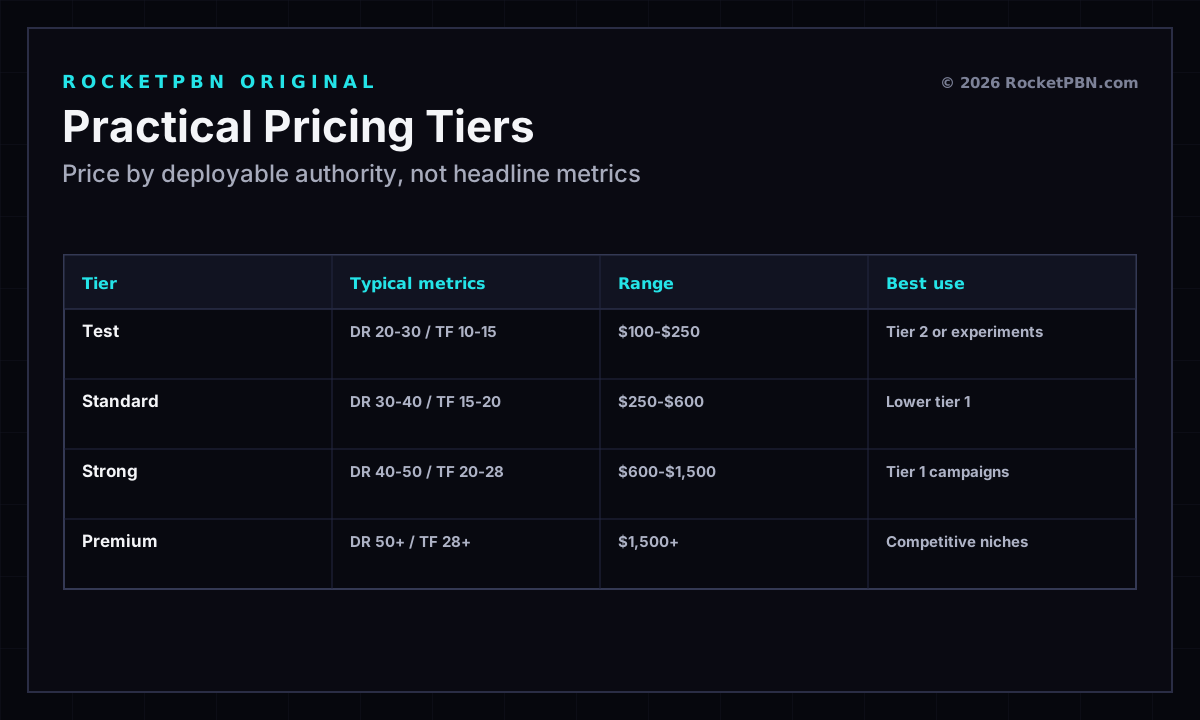
Pricing by Authority Tier
The numbers below are working ranges for SEO operators, not brand-market valuations.
| Domain tier | Typical metrics | Practical price range | Best use |
|---|---|---|---|
| Test asset | DR 20-30, TF 10-15 | $100-$250 | Tier 2 or experiments |
| Standard PBN | DR 30-40, TF 15-20 | $250-$600 | Lower tier 1 |
| Strong PBN | DR 40-50, TF 20-28 | $600-$1,500 | Tier 1 campaigns |
| Premium niche asset | DR 50+, TF 28+ | $1,500-$5,000+ | Competitive niches |
| Rare topical authority | DR 60+, clean niche history | $5,000+ | Brand or major campaign |
High prices need multiple proofs: clean history, strong topical trust, stable referring domains, natural anchors, and a clear deployment role.
What Raises Price
Price should rise when the domain has exact niche history, dominant Topical Trust Flow, strong editorial links, clean anchors, stable link trend, and commercial niche relevance. restricted-niche and finance domains cost more because supply is restricted and buyer demand is high.
A former sports publisher analysis site with DR 45, TF 25, Sports and regulated-market topical trust, and clean anchors is not priced like a general blog.
What Lowers Price
Discount for long downtime, mixed history, foreign-language mismatch, weak TF:CF, concentrated backlinks, exact-match anchor pollution, and unclear deployment. A cheap domain can still be useful for tests, but it should not be treated like a premium tier 1 asset.
The operator mistake is paying premium price for a domain that only passes one metric.
How Should You Deploy Expired Domains After Buying?
Deploy expired domains by matching the new site to the old topic, rebuilding key historical pages, publishing enough content before linking out, waiting for indexing, and placing contextual links at controlled velocity. The deployment should make the domain look like a revived publisher, not a link shell.
Rebuild Strategy
Start with the old topic. If the domain was a sports publication, rebuild it as a sports analysis site. If it was a poker strategy blog, rebuild poker, review-site math, game theory, or regulated-market education content. If it was a finance blog, rebuild finance content.
Publish at least 10 to 15 articles before the first money link. Include homepage, category pages, about page, contact page, privacy page, and internal links. A real site needs enough structure to justify its existence.
Link Timing
Wait until the rebuilt site is indexed and crawled. Four to six weeks is a practical minimum for tier 1 PBN use. During that time, publish content, restore important historical URLs where possible, and avoid immediate outbound commercial links.
When links start, place them inside relevant articles. Avoid sitewide links, footer links, and repeated templates across multiple domains.
Deployment by Use Case
| Use case | Deployment style | Link posture |
|---|---|---|
| Tier 1 PBN | Full topical rebuild | Contextual links after indexing |
| Tier 2 PBN | Smaller rebuild | Links to tier 1 assets |
| 301 redirect | Closely related URL mapping | Use only with topical continuity |
| Standalone site | Full content roadmap | Monetize after authority stabilizes |
For network execution, read How to Build a PBN.
What Expired Domain Strategy Works Best for restricted-niche?
For restricted-niche, the best expired domains come from regulated-market, sports, poker, racing, esports, and regulated-adjacent histories. Generic authority is weaker because review-site and sports publisher SERPs reward topical relevance, controlled anchors, market-specific content, and high-trust referring domains.

Minimum restricted-niche Buying Criteria
restricted-niche domains need stricter filters than general SEO domains.
| Metric | Minimum | Preferred |
|---|---|---|
| DR | 35+ | 45+ |
| TF | 20+ | 25+ |
| TF:CF ratio | 0.5+ | 0.6+ |
| Referring domains | 20+ | 40+ |
| Topical Trust Flow | Sports, regulated-market, Games, News | Dominant category match |
| History | 3+ years relevant content | Continuous niche history |
If the domain cannot support regulated-market or sports content naturally, do not force it into the campaign.
review-site Versus sports vertical Domains
review-site campaigns benefit from old review-site review, poker, gaming, payment, and regulated-market news domains. sports vertical campaigns can use sports media, predictions, racing, football, tennis, MMA, esports, and regional sports blogs.
Sports domains are often better buys because the topical bridge to regulated is natural and the auction market may be less inflated than obvious review-site names.
Why Topical Match Beats Raw DR
A DR 42 sports domain with clean Topical Trust Flow can outperform a DR 55 general lifestyle domain for sports publisher campaigns. The lower DR domain carries a stronger relevance story. Relevance helps the rebuilt site, the outbound link context, and the money page relationship.
For niche-specific deployment, read Expired Domains for restricted-niche SEO.
What Risks Should You Avoid With Expired Domains?
Avoid expired domains with spam anchors, deindex history, low TF:CF, unrelated topical trust, long Wayback gaps, link spikes, excessive outbound links, foreign-language mismatch, and trademark risk. Most failed purchases looked attractive in one tool and weak in the full evidence chain.
SEO Risk
The largest SEO risk is buying a domain whose visible metrics no longer represent usable authority. This happens when links are dead, discounted, irrelevant, or concentrated on pages you cannot rebuild.
Another common risk is over-optimized anchor history. If the domain was previously used for payday, adult, pharma, or unrelated review-site anchors, its link graph may carry baggage into the rebuild.
Operational Risk
PBN operators create risk when every site shares the same hosting, CMS template, plugin stack, author format, word count, publish schedule, and outbound link pattern. A clean domain can become a weak asset if the rebuild creates an obvious network pattern.
Domain quality and operational quality are separate. You need both.
Legal and Brand Risk
Some domains carry trademark, reputation, or industry-specific liability. Buying an old brand name can create confusion. In regulated-market, geo and compliance context matter. RocketPBN sells domain transfer only; buyers are responsible for legal use, licensing, content, and downstream deployment.
Do not buy a domain because it looks powerful if the brand history creates avoidable exposure.
What Questions Do Buyers Ask About Expired Domains for SEO?
Are expired domains still useful for SEO in 2026?
Yes, expired domains are still useful when the backlink profile is clean, the old topic matches the new site, and the rebuild creates real content value. They are much weaker when used as thin sites, unrelated redirects, or generic authority shells. The winning variable is coherent continuity: links, topic, content, and deployment all telling the same story.
What is the best metric for buying expired domains?
There is no single best metric. DR measures authority scale, Trust Flow measures link quality, Topical Trust Flow measures subject relevance, and referring domains measure link base stability. The best buying decision combines all of them with Wayback history, anchor review, index checks, and price discipline.
Should I use expired domains for 301 redirects?
Use 301 redirects only when the expired domain and destination have strong topical continuity. Redirecting a former sports vertical site to a sports publisher brand is more defensible than redirecting an unrelated education or local business domain to a review-site page. Most operators get better control from rebuilding the domain first.
How many expired domains do I need for a PBN?
For a small campaign, 5 to 10 clean domains can support early authority building. Competitive restricted-niche, finance, or affiliate campaigns may need 20 to 50 assets over time, mixed with niche edits, guest posts, and PR. Quality matters more than raw count. Ten clean topical domains beat fifty random weak domains.
Can I buy expired domains without using SEO tools?
You can, but it is a bad operating model. At minimum, use Ahrefs or Semrush for backlink review, Majestic for Trust Flow and Topical Trust Flow, Wayback Machine for history, and Google for index checks. Without tools, you are buying based on seller claims and surface-level metrics.
What is the safest way to use an expired domain?
The safest operational path is to rebuild the domain as a real topical site, publish enough relevant content, wait for indexing, maintain normal update patterns, and place contextual links slowly. Avoid immediate commercial linking, unrelated topic changes, repeated templates, and aggressive anchor concentration.