SpamZilla Complete Guide for Expired Domains
SpamZilla Complete Guide for Expired Domains
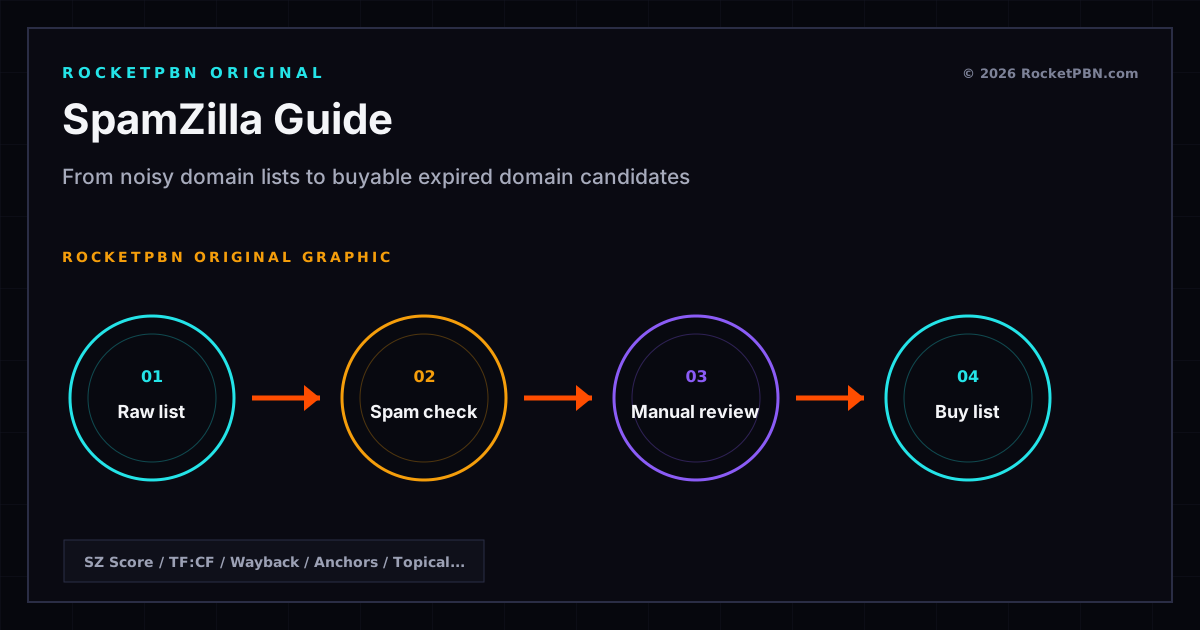
SpamZilla is useful because expired domain research is mostly rejection work. The market is full of domains with inflated authority metrics, unrelated backlink history, long parking gaps, language flips, anchor pollution, and old spam patterns. A tool that puts source lists, SEO metrics, history signals, spam checks, and filtering into one workflow can save hours before manual review even begins.
The mistake is treating SpamZilla as a buying decision. It is not. It is a filtering engine. The best use is to compress a huge universe of expiring, auction, pending-delete, and expired domains into a small set worth opening in Majestic, Ahrefs, Wayback, Google, and your own campaign map.
This guide explains which filters matter, how to build a repeatable workflow, what SpamZilla catches well, what it cannot decide for you, and how PBN operators and restricted-niche affiliates should use it without outsourcing judgment to one score. The output is not a pretty spreadsheet. The output is a short list of domains that deserve money.
What Is SpamZilla and When Should Operators Use It?
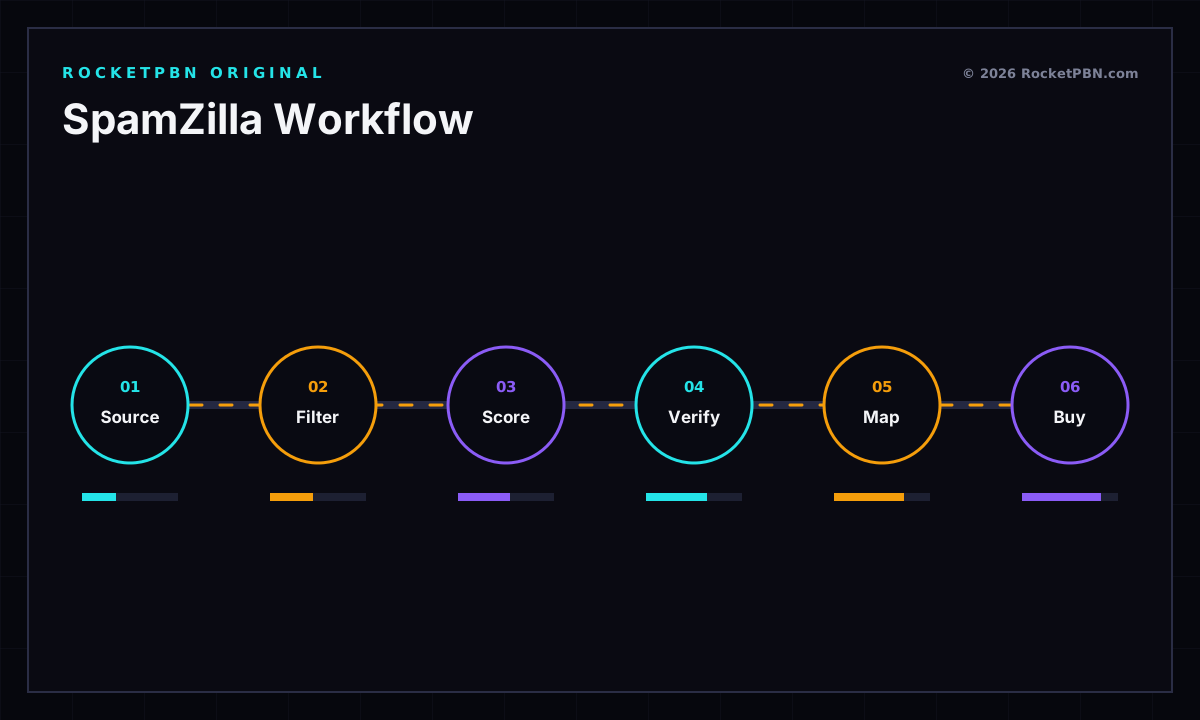
SpamZilla is an expired domain research platform for sourcing and filtering domains before manual due diligence. Operators should use it to triage auction, expired, pending-delete, and custom domain lists, then verify finalists with backlink, history, index, and topical checks.
What SpamZilla Is Good At
SpamZilla is strongest at high-volume filtering. Instead of opening multiple tools for every candidate, you can start with source type, TLD, domain age, Majestic data, referring domains, spam indicators, language history, index status, keywords, and price. That turns thousands of domains into a workable shortlist.
The official SpamZilla helpdesk says its domain table uses multiple APIs and starts with Majestic as a broad baseline. That is the right mental model: SpamZilla is a fast first pass across a large domain universe.
What SpamZilla Is Not
SpamZilla is not final due diligence. It does not replace URL-level Topical Trust Flow review, Ahrefs anchor analysis, Wayback continuity checks, manual backlink review, or Google index inspection. Automated spam scoring is useful, but it is not a verdict.
A domain can pass filters and still fail because its best links point to dead pages, its anchor profile is polluted, its historical topic does not match your campaign, or its strongest authority page cannot be rebuilt.
Best-Fit Users
SpamZilla fits operators who need repeatable sourcing: PBN builders, restricted-niche affiliates, domain brokers, 301 redirect testers, and agency link builders. Casual buyers can use it, but the value increases when you process inventory weekly and already know your rejection thresholds.
| User type | Best SpamZilla use | Manual check still required |
|---|---|---|
| PBN builder | Find clean candidates at volume | Topical TF, anchors, Wayback |
| restricted-niche affiliate | Surface sports/review-site opportunities | regulated-market relevance and GEO fit |
| Agency link builder | Build prospecting lists | Client niche and risk mapping |
| Domain investor | Find resale candidates | Brand, trademark, liquidity |
Which SpamZilla Filters Should You Set First?
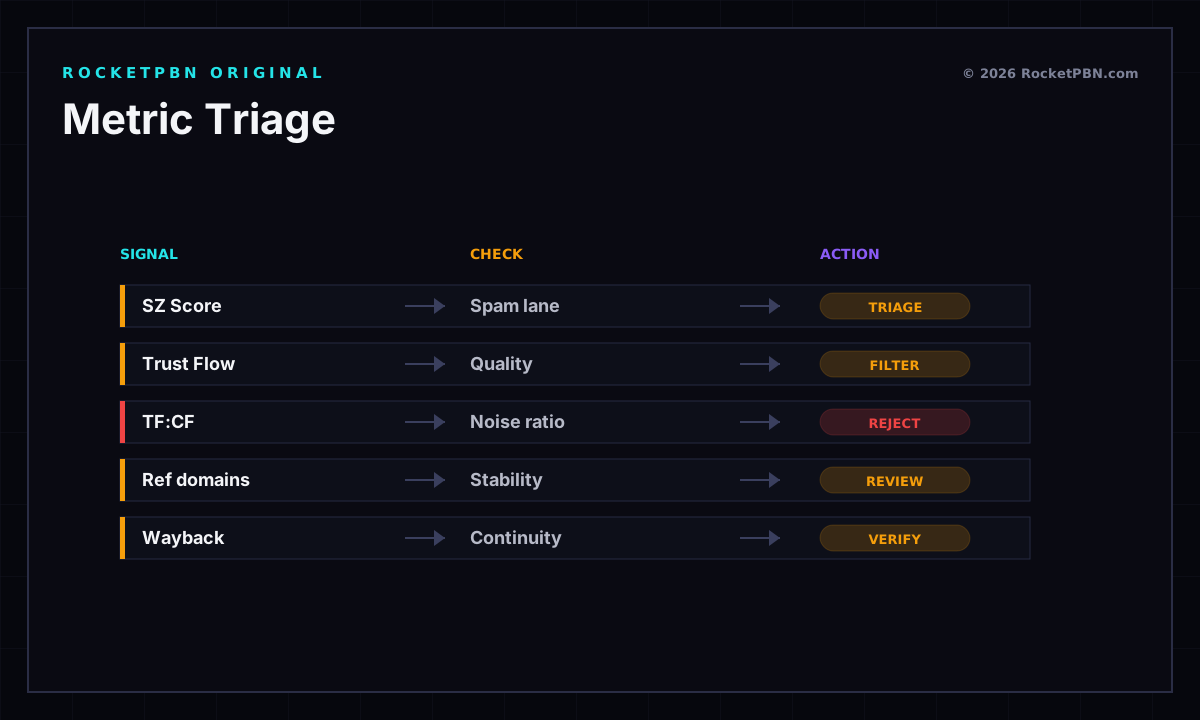
Start with filters that remove obvious waste: TLD, source type, domain age, Trust Flow, Citation Flow ratio, referring domains, language, spam indicators, indexed status, and price ceiling. Add topical and backlink filters after the broad quality floor is already in place.
Baseline Filter Stack
Use a conservative baseline before adding niche-specific filters. These thresholds are built for SEO use, not brandable domain investing.
| Filter | Tier 2 test | Tier 1 PBN | restricted-niche tier 1 |
|---|---|---|---|
| Domain age | 2+ years | 3+ years | 4+ years |
| Trust Flow | 12+ | 18+ | 22+ |
| TF:CF ratio | 0.40+ | 0.50+ | 0.55+ |
| Referring domains | 10+ | 15+ | 20+ |
| SZ Score | 0-20 preferred | 0-15 preferred | 0-10 preferred |
| TLD | .com or relevant ccTLD | .com preferred | .com or target GEO |
| Price ceiling | $150 | $750 | $2,500 |
SpamZilla's own SZ Score documentation describes a 1-100 cleanliness score where lower is cleaner, with examples such as super clean, very clean, clean, and questionable ranges. Use that as a spam triage signal, then verify the underlying evidence.
Source Filters
SpamZilla aggregates multiple acquisition stages. Each source has a different buying posture.
| Source type | Advantage | Risk | Best use |
|---|---|---|---|
| Auction | Better visible inventory | Higher pricing | Premium tier 1 domains |
| Closeout | Lower price | More variance | Testing and tier 2 |
| Pending delete | Early access | Competitive catches | Niche hunting |
| Expired lists | High volume | Heavy vetting load | Bulk sourcing |
| Custom lists | Your own prospect pool | Credit usage | Focused due diligence |
Auction domains often have better visible metrics, but the market sees them too. Pending-delete and closeout domains can be cheaper, but the rejection rate climbs fast.
Keyword and Backlink Filters
Keyword filters are useful when they inspect backlink context, anchors, or historical topic. They are weak when they only match strings inside the domain name. For restricted-niche, terms like regulated, review-site, poker, odds, sports publisher, racing, football, tennis, MMA, esports, picks, and tipster can surface relevant candidates.
Do not over-filter early. If you require exact review-site keywords from the first pass, you will miss sports domains that are better fits for regulated campaigns.
How Do You Build a SpamZilla Workflow That Finds Buyable Domains?
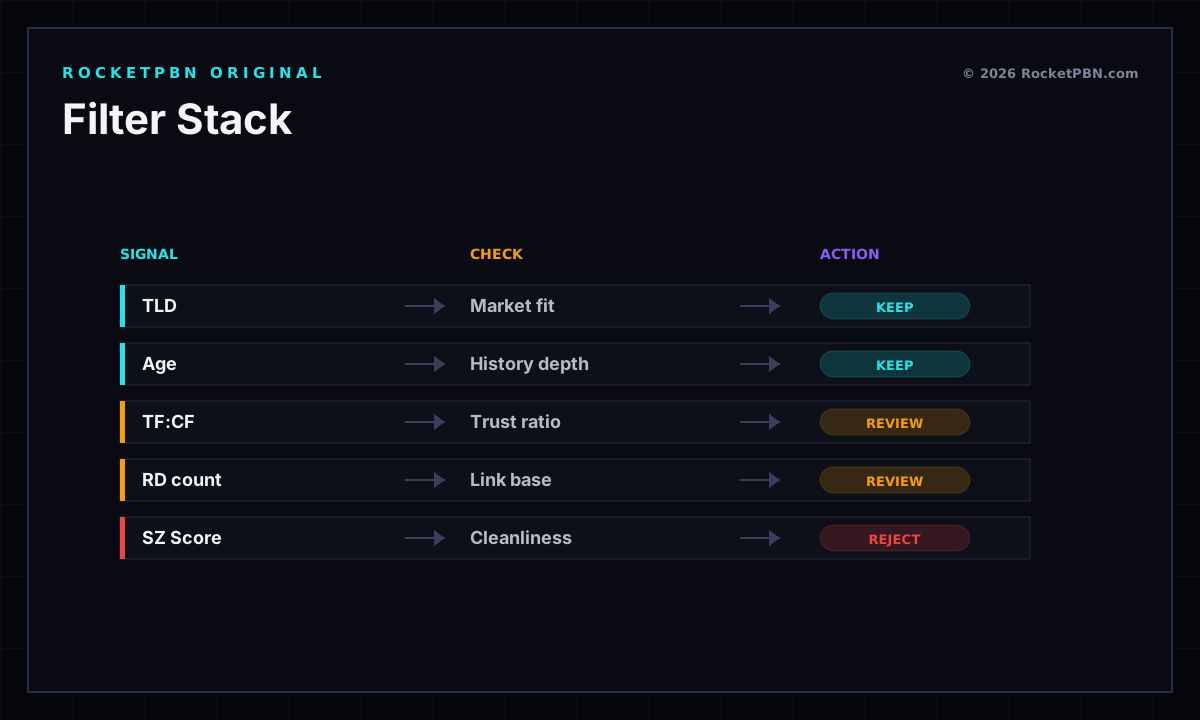
Build the workflow in four passes: broad quality filters, topical relevance filters, manual backlink review, and final campaign mapping. SpamZilla should create the shortlist, but purchase decisions should happen only after cross-checking Majestic, Ahrefs, Wayback, and index status.
Pass 1: Remove Obvious Bad Inventory
Start broad. Set TLD, age, Trust Flow, TF:CF, referring domain, spam, source, and price filters. At this stage, you are not looking for winners. You are removing domains that cannot meet the minimum economics of an SEO campaign.
If the list is still huge, tighten Trust Flow and referring domains. If the list becomes too small, relax price or source type before relaxing trust quality.
Pass 2: Add Topical Relevance
Add niche terms, topical categories where available, backlink keywords, language, and GEO filters. For regulated-market campaigns, do not limit yourself to review-site. Sports, racing, poker, odds, esports, fantasy sports, and regional regulated terms can all produce useful domains.
This pass should answer one question: can this domain plausibly become a real site in the target niche?
Pass 3: Manually Review Finalists
Open each finalist in the tools that expose the truth.
- Majestic for Trust Flow, Citation Flow, and Topical Trust Flow.
- Ahrefs for referring domains, anchors, link growth, and top pages.
- Wayback Machine for historical content continuity.
- Google for index status and current footprint.
- Registrar or auction source for price and transfer conditions.
If any tool tells a different story, slow down.
Pass 4: Map to Deployment
Do not buy a domain until you know its role. Assign each finalist to tier 1 PBN, tier 2 support, redirect test, resale, or reject. A domain that is not strong enough for tier 1 might still be useful as tier 2. A domain with brandable value but weak SEO fit might be a resale candidate, not a campaign asset.
Use the Expired Domain Evaluation Checklist as the final gate before payment.
What SpamZilla Metrics Matter Most for PBN Builders?
PBN builders should prioritize SZ Score, Trust Flow, TF:CF ratio, referring domain quality, Topical Trust Flow, indexed status, Wayback continuity, anchor text, and outbound history. DR and DA are useful, but secondary to clean, relevant trust that can support contextual links.
SZ Score and Spam Signals
SpamZilla's SZ Score is designed to summarize domain cleanliness. Official documentation says it uses a proprietary weighted algorithm and that 1 represents a low level of spam. The useful operator move is not to worship the score. It is to use it as a triage lane.
| SZ Score posture | Buying interpretation | Action |
|---|---|---|
| 0-5 | Very clean candidate | Continue full vetting |
| 6-15 | Clean enough for review | Check anchors and history |
| 16-20 | Usable but inspect closely | Discount or use lower tier |
| 20+ | Questionable | Buy only with strong evidence |
Quality Metrics
Trust Flow and TF:CF are the fastest quality filters. A domain with CF 50 and TF 5 usually has volume without trust. That profile is not a bargain. It is a cleanup problem.
For tier 1 PBN sites, TF 18+ and TF:CF 0.5+ are practical minimums. For tier 2, TF 12+ can work if the history is clean and the topical fit is strong.
Backlink Metrics
Referring domain count matters because equity concentration creates fragility. A DR 42 domain with six referring domains can collapse when one source drops. A DR 38 domain with 35 clean referring domains is often more stable.
Review authority links manually. One Wikipedia link, one university link, or one media link is useful only if it is still live, contextually relevant, and pointing to a page you can rebuild or redirect internally.
History Metrics
SpamZilla's history signals help identify domains that deserve deeper Wayback review. Look for continuous real content, consistent topic, and normal ownership behavior. Reject domains with long parking periods, repeated drops, sudden niche flips, or old doorway pages.
The best PBN domains look boring: same topic for years, natural anchors, real publisher links, no dramatic spikes.
How Should restricted-niche Affiliates Use SpamZilla Differently?
restricted-niche affiliates should use stricter topical, trust, and GEO filters because regulated-market SERPs are expensive and link relevance is harder to source. Filter for sports, review-site, poker, regulated, racing, and local market signals, then verify Topical Trust Flow before bidding.
Niche Filters That Work
Useful terms include review-site, regulated, sports publisher, odds, poker, racing, football, tennis, MMA, esports, fantasy, prediction, picks, tipster, lottery, and bingo. Also search by GEO modifiers when campaigns target the UK, Australia, Canada, Brazil, India, or specific European markets.
Sports domains often provide better value than obvious review-site domains. The market overprices domains with review-site in the name. Former sports publications can support regulated content naturally and often have cleaner backlink histories.
Minimum restricted-niche Benchmarks
For tier 1 restricted-niche support, use higher floors than general SEO campaigns.
| Metric | Minimum | Preferred |
|---|---|---|
| DR | 35+ | 45+ |
| TF | 22+ | 28+ |
| TF:CF | 0.55+ | 0.65+ |
| Referring domains | 20+ | 40+ |
| Topical fit | Sports or regulated-market in top 3 | Dominant matching category |
| History | Clean niche continuity | 3+ years continuous content |
Cheap restricted-niche domains are usually cheap for a reason. If the domain is clean, topically aligned, and strong, other operators will see it too.
Deployment Mapping
Map review-site domains to review-site comparison, bonus, payment, game guide, and regulation content. Map sports domains to regulated analysis, odds education, match previews, and sports news. Do not force a tennis domain into generic review-site content on day one.
For topical fit, pair this workflow with What Is Topical Trust Flow?.
What Red Flags Should Stop a SpamZilla Purchase?
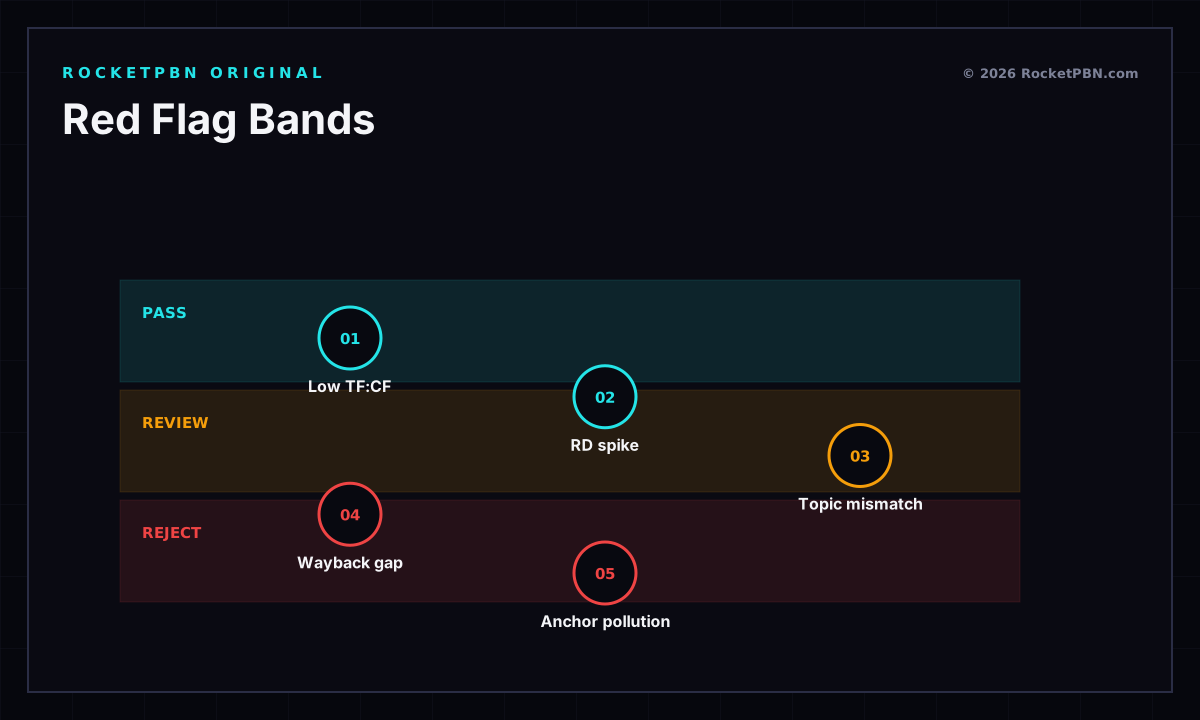
Stop the purchase when the domain shows low TF:CF, unrelated Topical Trust Flow, anchor pollution, long Wayback gaps, deindexing, suspicious link spikes, foreign-language mismatch, or outbound links to blacklisted spam sites. Any one major red flag can erase attractive metrics.
Metric Red Flags
The fastest red flags are numerical.
| Red flag | Why it matters | Action |
|---|---|---|
| TF:CF below 0.3 | Link volume without trust | Reject |
| Referring domains below 8 | Fragile authority | Reject for tier 1 |
| Sudden RD spike | Possible artificial link burst | Deep review |
| Topical mismatch | Weak campaign relevance | Discount or reject |
| Very high outbound domains | Possible link farm history | Reject |
History Red Flags
Wayback gaps over 12 months reduce confidence. Multiple unrelated topics over a short period suggest the domain was passed between operators. Parking pages are not always fatal, but long parking periods weaken the continuity story.
A clean expired domain should have a history you can explain in one sentence. If the story requires excuses, do not pay premium pricing.
Anchor Red Flags
Reject domains where exact-match commercial anchors dominate. review-site, loan, adult, pharma, and payday anchors on a non-matching domain indicate prior manipulation. Branded, URL, and natural topical anchors are safer.
Apply the full 12-point checklist before buying, especially when spam indicators and anchor history disagree.
How Do Credits and Pricing Affect a SpamZilla Workflow?
SpamZilla uses subscriptions and credits, so workflow design matters. Official helpdesk pages describe monthly subscription access, monthly credits that renew but do not roll over, optional top-up credits, and a one-domain-to-one-credit processing model for custom domain checks.
What the Credit System Means Operationally
The credit model should change how you process lists. Do not burn credits on every random candidate. Use table filters first, save the survivors, then process custom checks only when a domain has already cleared basic authority, price, source, and topical filters.
SpamZilla documentation says monthly credits refresh each month and purchased credit packs do not expire until used. It also says repeat processing of the same domain is cached so the same domain is not charged repeatedly.
Pricing Caveat
SpamZilla helpdesk pages currently reference a subscription model and a dollar price for full database access, but tool pricing can change. Treat any pricing mention in an article as a snapshot, not a buying contract. Check SpamZilla directly before budgeting a sourcing operation.
Credit Discipline Workflow
| Stage | Credit posture | Reason |
|---|---|---|
| Raw discovery | No custom processing | Too much noise |
| Filtered shortlist | Process selectively | Candidate passed basics |
| Manual finalist | Spend if needed | Domain may be buyable |
| Recheck same domain | Use cache behavior | Avoid duplicate waste |
The budget risk is not the subscription. The budget risk is buying one bad domain because the workflow skipped manual review.
How Does SpamZilla Compare With Manual Expired Domain Research?
SpamZilla is faster for discovery, saved filters, and bulk triage. Manual research is stronger for final judgment, topical interpretation, and campaign fit. Serious operators use both: SpamZilla for sourcing, then Ahrefs, Majestic, Wayback, and Google for confirmation.
Speed Advantage
Manual research starts with scattered lists and repeated tool switching. SpamZilla centralizes enough data to reject most domains quickly. That is valuable because expired domain buying has low hit rates. If only 5 to 15 domains out of 300 deserve deeper review, speed matters.
Judgment Advantage
Manual review still wins at nuance. A tool can flag metrics, but it cannot fully decide whether a former regional football blog should support a UK sports publisher affiliate, or whether a domain's old authority page can be rebuilt convincingly.
Operators should not outsource judgment to filters.
Cost Advantage
SpamZilla's subscription cost is small compared with one bad domain purchase. A single $600 domain with inflated metrics and poor history costs more than months of tooling. The tool pays for itself when it prevents one avoidable buy or surfaces one underpriced domain before the auction closes.
For source comparison, separate auction, closeout, pending-delete, and broker inventory before judging price.
What Questions Do Operators Ask About SpamZilla?
Is SpamZilla worth it for expired domain buying?
SpamZilla is worth it if you process expired domains regularly. It saves time by combining source lists, SEO metrics, spam checks, and filters into one workflow. It is less valuable if you buy one domain per year. The return comes from repeated shortlist building and avoiding bad purchases.
Can SpamZilla replace Ahrefs or Majestic?
No. SpamZilla can surface candidates and show useful metrics, but Ahrefs and Majestic are still needed for detailed backlink review, anchor analysis, Trust Flow inspection, and Topical Trust Flow validation. Treat SpamZilla as the front-end filter, not the final authority check.
What filters should I use first in SpamZilla?
Start with TLD, domain age, Trust Flow, TF:CF ratio, referring domains, spam indicators, price, and source type. After the quality floor is set, add niche terms, language, GEO, and topical filters. Starting with narrow keyword filters too early can hide strong adjacent domains.
Is SpamZilla good for restricted-niche domains?
SpamZilla is useful for restricted-niche sourcing because it can filter large domain sets by authority, history, keywords, and source type. The final review must be stricter than general niches. For regulated-market campaigns, verify Sports, regulated-market, Games, or adjacent topical trust before bidding.
Should I buy domains directly from SpamZilla lists?
Do not buy from a list without manual review. Open finalists in Majestic, Ahrefs, Wayback, and Google first. Check topical fit, anchors, strongest linked pages, index status, and historical content. SpamZilla should shorten the path to due diligence, not remove due diligence.
What Should You Read Next?
- Expired Domain Evaluation Checklist
- What Is Topical Trust Flow?
- How to Find Expired Domains
- Expired Domains for restricted-niche SEO
- Browse pre-vetted aged domains ->
Source notes: SpamZilla's official helpdesk documents the SZ Score, credits, subscription model, domain table metrics, and Majestic-based baseline processing. Treat official SpamZilla pages as tool definitions; treat RocketPBN's thresholds above as operator-side buying rules for expired domain campaigns.