Source pages
We care where the backlinks come from, whether they still exist, and whether the pages are relevant enough to matter.
RocketPBN sells vetted aged and expired domains for SEO operators who do not buy from DR alone. Each shortlist starts with backlink source context, anchor history, Wayback checks, niche fit, and transfer details already laid out.
Terminal members see fresh drops before public release. Domains can sell without notice.
A high DR score does not prove the old links still exist, the anchors make sense, or the domain was not abused. RocketPBN makes the source links the first filter, not the last check.
Most domains never reach the desk because the links, history, or niche fit do not hold up.
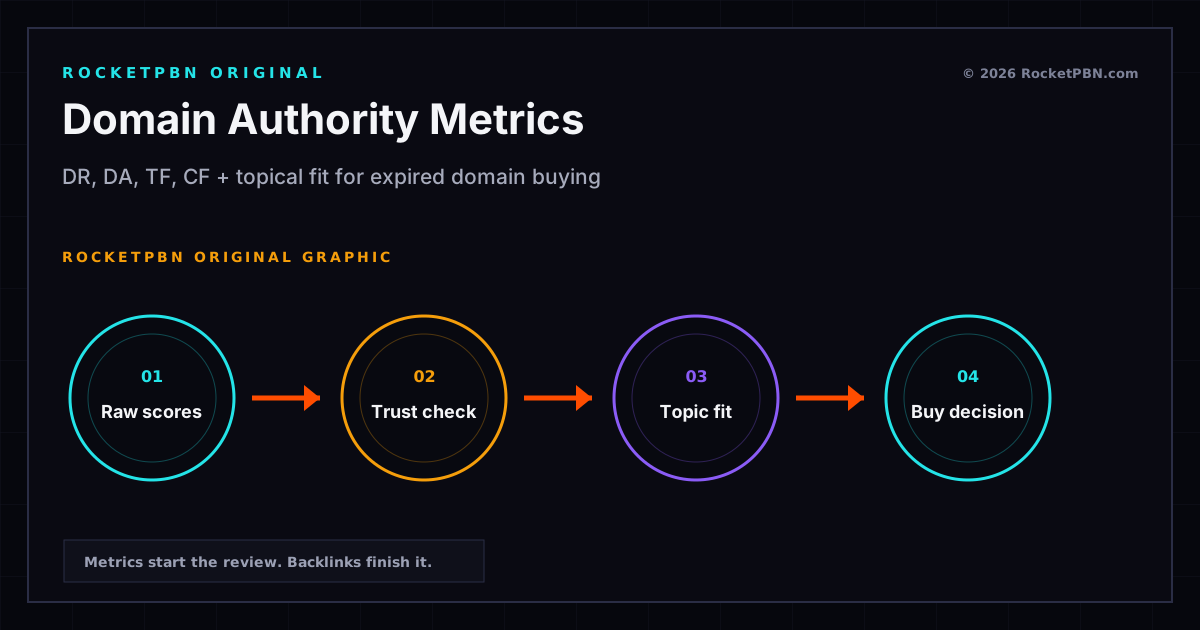
Real source links lead the review. DR and DA help filter, but they do not close the decision.
Terminal buyers see new drops before broader public release.
| DOMAIN | Source links | REF_DOMAINS | Why it may matter | PRICE ($) | ACTION |
|---|---|---|---|---|---|
| a••••••••••••t.comLogin | 58 | 46 | Editorial source links with mixed anchors | $••• | UNLOCK DETAILS |
| r••••••••••r.comLogin | 2,276 | 104 | Review and odds-page references | $••• | UNLOCK DETAILS |
| d••••••••••••g.comLogin | 183 | 146 | Directory and magazine mentions | $••• | UNLOCK DETAILS |
| d••••••••••p.comLogin | 44 | 40 | Aged guide references | $••• | UNLOCK DETAILS |
| e••••••••r.comLogin | 89 | 38 | Live review refs with clean handover route | $173 | UNLOCK DETAILS |
Every domain is judged by the signals that matter after you own it: source pages, anchor shape, archive history, registrar path, and the legal boundary of the sale.
We care where the backlinks come from, whether they still exist, and whether the pages are relevant enough to matter.
Anchor mix and Wayback history can reveal niche drift, spam reuse, or brand risk before you buy.
You know the registrar path before payment: auth code, account push, and expected timing.
RocketPBN sells the domain only. No hosting, content, ranking guarantee, or legal warranty on your usage.
Build a shortlist, review the backlink context, lock the price and transfer route, then settle in USDT before the domain is pushed or released by auth code.
Filter by niche, source-link quality, age, ref domains, budget, TLD, and registrar constraints.
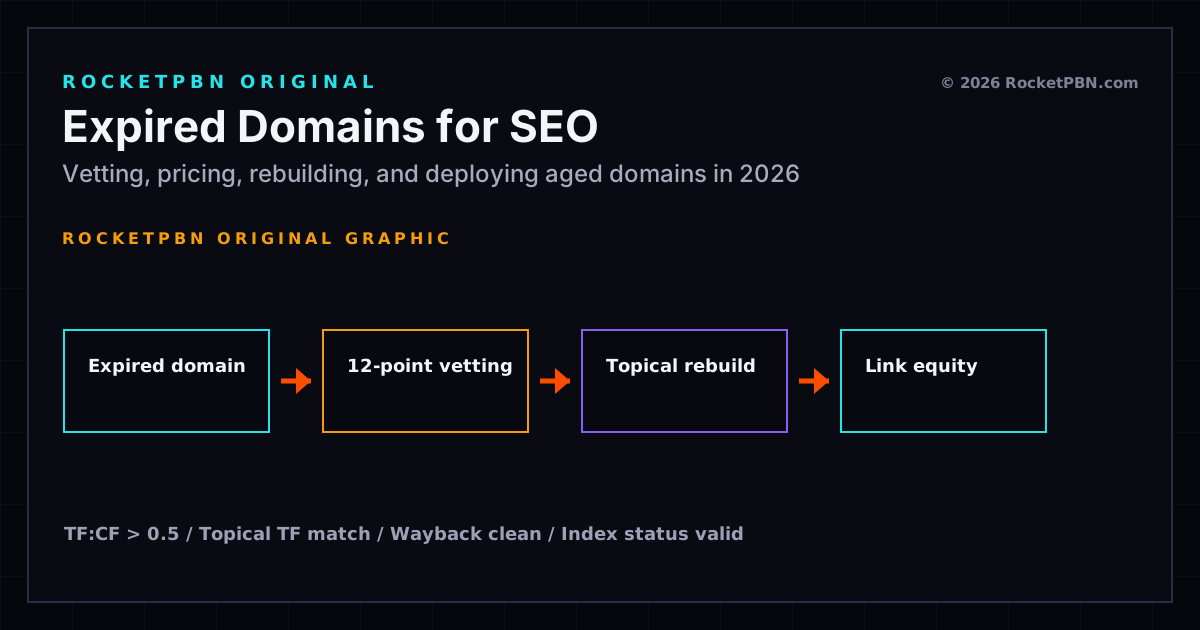
Look at source pages, anchor history, topical fit, archive footprint, and signs of prior abuse.
Agree on the final USDT amount, payment network, registrar path, and whether the domain moves by auth code or account push.
Send USDT, share the transaction ID, then receive the auth code or account push after settlement is verified.
Practical notes for buyers who want to evaluate aged PBN domains without relying on inflated metrics.
Read the blogRepeat buyers come back because the desk keeps the decision focused: source links, history, price, transfer route, and risk boundary.
The useful part was seeing which old pages still linked to the domain, not just the DR number.
I rejected two domains after checking the refs, then bought one with cleaner source pages.
The desk made it obvious which domains had real source pages and which were just carrying a nice-looking score.
The old site story mattered. The brief gave me enough context to ask the right follow-up questions.
Seeing transfer route, refs, and archive risk in one place made the decision faster.
The best signal was what RocketPBN did not promise: no ranking guarantee, just domain, refs, and risk boundaries.
I used to sort by DR first. Now I check whether the referring pages still make sense.
The shortlist format helped me compare domains by backlink context instead of jumping between tools.
Clear USDT and transfer expectations removed the usual back-and-forth after choosing the domain.
I bought fewer domains, but the ones I bought had a cleaner reason to exist in the campaign.
The useful part was seeing which old pages still linked to the domain, not just the DR number.
I rejected two domains after checking the refs, then bought one with cleaner source pages.
The desk made it obvious which domains had real source pages and which were just carrying a nice-looking score.
The old site story mattered. The brief gave me enough context to ask the right follow-up questions.
Seeing transfer route, refs, and archive risk in one place made the decision faster.
The best signal was what RocketPBN did not promise: no ranking guarantee, just domain, refs, and risk boundaries.
I used to sort by DR first. Now I check whether the referring pages still make sense.
The shortlist format helped me compare domains by backlink context instead of jumping between tools.
Clear USDT and transfer expectations removed the usual back-and-forth after choosing the domain.
I bought fewer domains, but the ones I bought had a cleaner reason to exist in the campaign.
RocketPBN sells domains, not standalone backlinks. The value comes from aged domains with real existing backlinks, referring domains, and SEO signals.
The public page is a preview. Live availability, exact source URLs, full metrics, and final pricing stay inside the protected desk.
No. Domains are sold as-is. Metrics help evaluate the asset, but rankings, indexing, traffic, and future SEO outcomes are not guaranteed.
The source links: where they come from, whether they still exist, whether the pages fit the niche, and whether the anchor and archive history look usable.
Review source pages, anchor text, referring domains, archive history, trademark risk, registrar status, price, and whether the domain fits your planned use.
Open the desk, choose the aged domains that match your plan, and send a shortlist. We align on source-link context, transfer route, and final USDT price before you commit.