Comment construire un PBN en 2026 : guide étape par étape
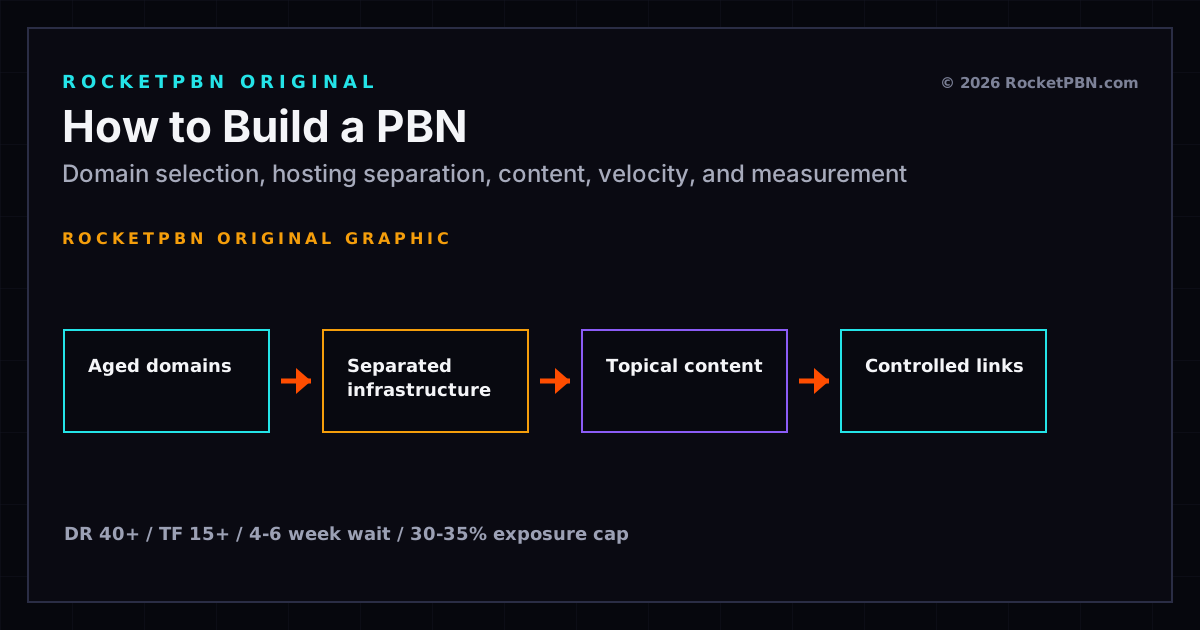
Comment construire un PBN en 2026 : guide étape par étape avec coûts et benchmarks
Construire un private blog network est une décision d'infrastructure, pas un raccourci. Les opérateurs qui prennent des pénalités ne se font pas attraper parce que les PBNs ont cessé de fonctionner ; ils se font attraper parce qu'ils sautent les étapes. Hébergement partagé sur 20 sites. Une seule propriété Google Analytics. Exact-match anchors sur chaque lien. Ce sont des erreurs d'ingénierie, pas des erreurs de stratégie.
Ce guide couvre le build complet : sélection des domaines, architecture hosting, suppression des footprints, production de contenu, déploiement des liens et mesure de performance. L'objectif n'est pas de vendre une méthode magique. L'objectif est de donner un framework opérateur avec coûts, seuils et décisions de rejet.
Si vous cherchez une vue théorique, beaucoup d'articles suffisent. Celui-ci est écrit pour les opérateurs qui doivent acheter, reconstruire, linker, mesurer et remplacer des assets sans créer de pattern évident.
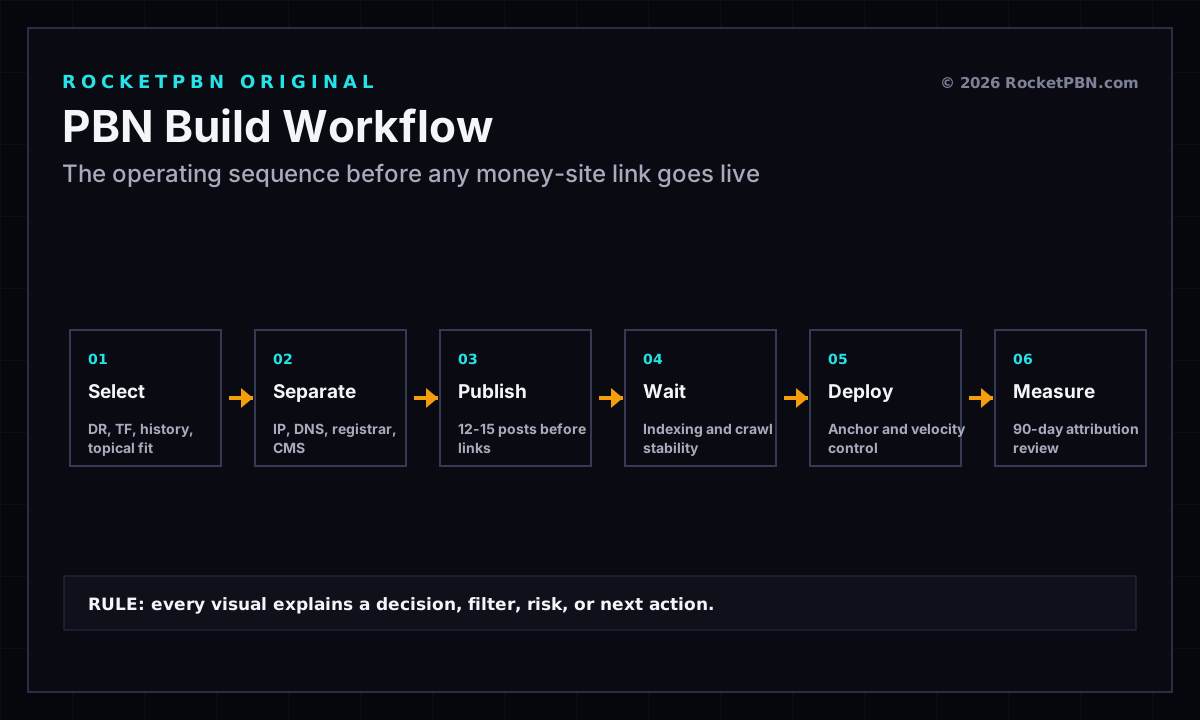
Qu'est-ce qu'un PBN et quand cela a-t-il du sens ?
Un PBN est un ensemble de sites indépendamment opérés, généralement construits sur des expired domains, utilisés pour placer des backlinks contrôlés vers un money site. Vous possédez chaque site du réseau. Vous contrôlez anchor text, contexte de placement, timing et attributs de lien. Aucun autre canal de link acquisition ne donne ce niveau de contrôle.
Comment un PBN transfère l'autorité
Quand un aged domain expire, son backlink profile ne disparaît pas instantanément. Les referring domains continuent de pointer vers les anciennes URLs. Ahrefs, Majestic et les graphes de liens gardent trace de ces signaux. Si vous enregistrez le domaine expiré, reconstruisez un site de contenu plausible et placez un lien vers votre money site, une partie de l'equity accumulée peut circuler.
Le mécanisme dépend de la crédibilité du domaine référent. Un ancien site sports news de huit ans avec backlinks éditoriaux réels porte plus de confiance qu'un domaine parking. L'exigence opérationnelle est que l'historique, le contenu et l'infrastructure du rebuild soutiennent la même histoire de publisher.
Ce proviso est tout le problème opérationnel des PBNs.
Construire, acheter ou éviter
Construisez votre propre PBN quand :
- Vous avez besoin d'anchors que les publishers refusent souvent.
- Vous gérez 2+ money sites et voulez une source scalable.
- Le budget year 1 dépasse $2,000 et la campagne dure 12+ mois.
- Vous voulez la permanence des liens sans dépendance à des éditeurs tiers.
Achetez des PBN links managés quand :
- Vous avez besoin de 5 à 15 liens sans gérer l'infrastructure.
- Le délai est court et vous ne pouvez pas attendre le build-out.
- Le budget ne justifie pas l'overhead technique.
Évitez les PBNs quand :
- Votre niche est très manuellement revue et vous ne pouvez pas tolérer l'exposition.
- Le money site DR est sous 15 et l'on-page/tech SEO n'est pas solide.
- Vous ne pouvez pas produire du contenu régulièrement sur les sites PBN.
Comment sélectionner des domaines pour un PBN ?
La sélection des domaines détermine le plafond de tout le reste. Un PBN bien construit sur de mauvais domaines gaspille l'investissement infrastructure. Cette phase doit concentrer la majorité du budget et du temps de revue.
Seuils métriques minimums
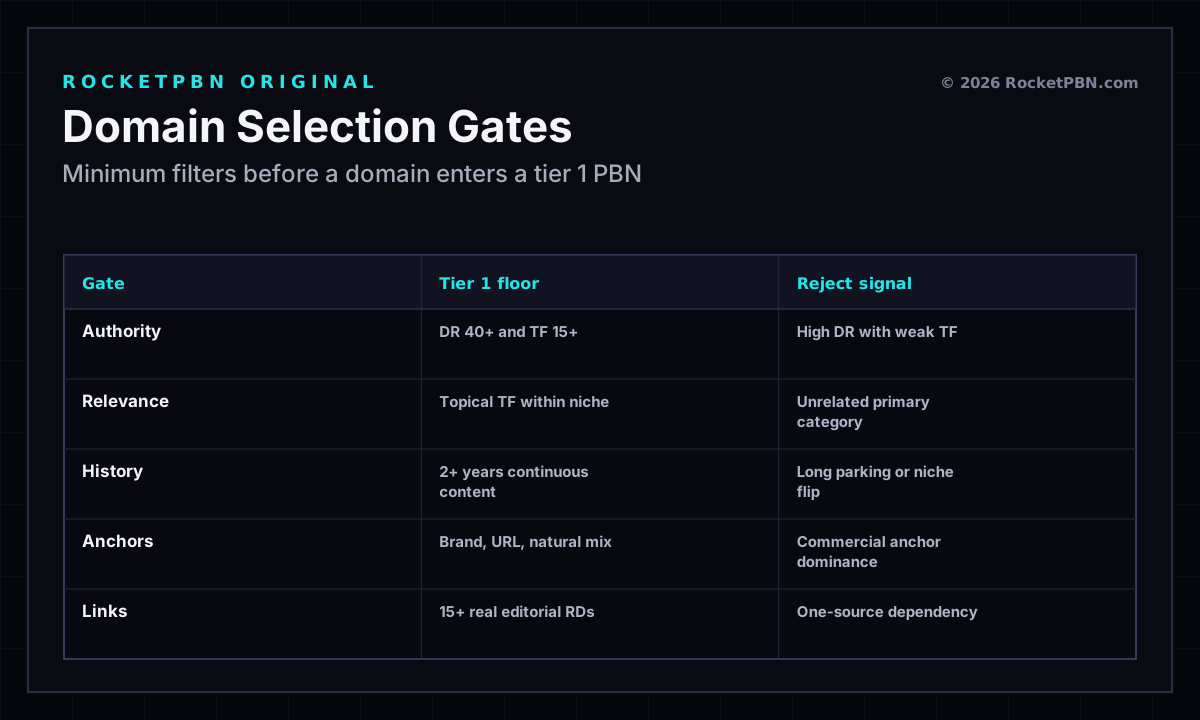
Chaque domaine doit passer ces gates avant toute autre considération :
| Métrique | Tier 1 liens directs money site | Tier 2 liens vers PBN |
|---|---|---|
| Ahrefs DR | ≥ 40 | ≥ 25 |
| Majestic TF | ≥ 15 | ≥ 10 |
| Ratio TF:CF | ≥ 0.45 | ≥ 0.35 |
| Moz Spam Score | ≤ 8% | ≤ 15% |
| Referring domains | ≥ 15 sites éditoriaux réels | ≥ 8 |
| Gap historique | Aucun gap > 12 mois | Aucun gap > 18 mois |
Si un domaine échoue à ces seuils, il est rejeté. Ne faites pas d'exception parce que le prix semble bon ou parce que le vendeur insiste.
La nature logarithmique de DR compte : un DR 40 n'est pas marginalement plus fort qu'un DR 30, il représente un niveau d'autorité cumulée supérieur. Les seuils ci-dessus sont des planchers, pas des objectifs.
Pertinence thématique : plus importante que DR
La variable la plus corrélée à la réussite d'une campagne PBN est l'alignement Topical Trust Flow entre le domaine PBN et la niche du money site.
Majestic attribue une catégorie de confiance principale à partir des sujets des sites qui linkent le domaine. Un domaine TF 20 avec forte catégorie Sports transmet une confiance plus utile à un affiliate sports vertical qu'un domaine TF 28 réparti entre Business, Shopping et Automotive.
Contrôle Majestic : Site Explorer → Trust Flow → onglet Topical Trust Flow → top categories. La catégorie #1 doit être dans un rayon de 1 à 2 degrés de la niche cible. "Sports" aligne un site sports publisher. "Sports > Football" est meilleur. "Business > Finance" ne soutient pas une campagne sports, même avec DR élevé.
Checklist de vetting en 7 points
- DR ≥ 40, TF ≥ 15, TF:CF ≥ 0.45 dans Ahrefs et Majestic.
- Topical TF aligné dans les catégories principales.
- Timeline referring domains sans spike artificiel récent.
- Top 20 referring domains ouverts manuellement.
- Top 30 anchors sans pharma, adult, payday, regulated-market spam hors sujet.
- Moz Spam Score ≤ 8% pour tier 1.
- Wayback avec 2+ ans de contenu continu et sujet cohérent.
Comptez 20 à 25 minutes par candidat. Avec un taux de réussite de 5 à 10% après filtres métriques, il faut souvent revoir 15 à 20 candidats pour trouver 1 ou 2 domaines déployables.
Où sourcer des domaines PBN-quality
| Source | Avantage | Limite | Usage |
|---|---|---|---|
| GoDaddy Auctions | Volume élevé | Très compétitif | Premium visible |
| NameJet | Moins saturé sur certains TLDs | Volume variable | .net, .org, niches |
| Dropcatch | Catch de cibles précises | Guerre de bids | Domaines surveillés |
| DomCop | Vue métriques multi-outils | Abonnement | Filtrage ROI |
| SpamZilla | Signaux spam et workflow | Revue manuelle requise | Shortlists rapides |
| Brokers curatés | Temps gagné | Premium pricing | 2-5 domaines/mois |
Les brokers curatés sont utiles quand vous avez besoin d'un petit nombre de domaines sans gérer la discovery. La prime se justifie seulement si les contrôles DR, TF, Wayback, anchors et topical fit sont documentés. Voir l'inventaire pre-vetted.
Quelle infrastructure hosting sépare correctement un PBN ?
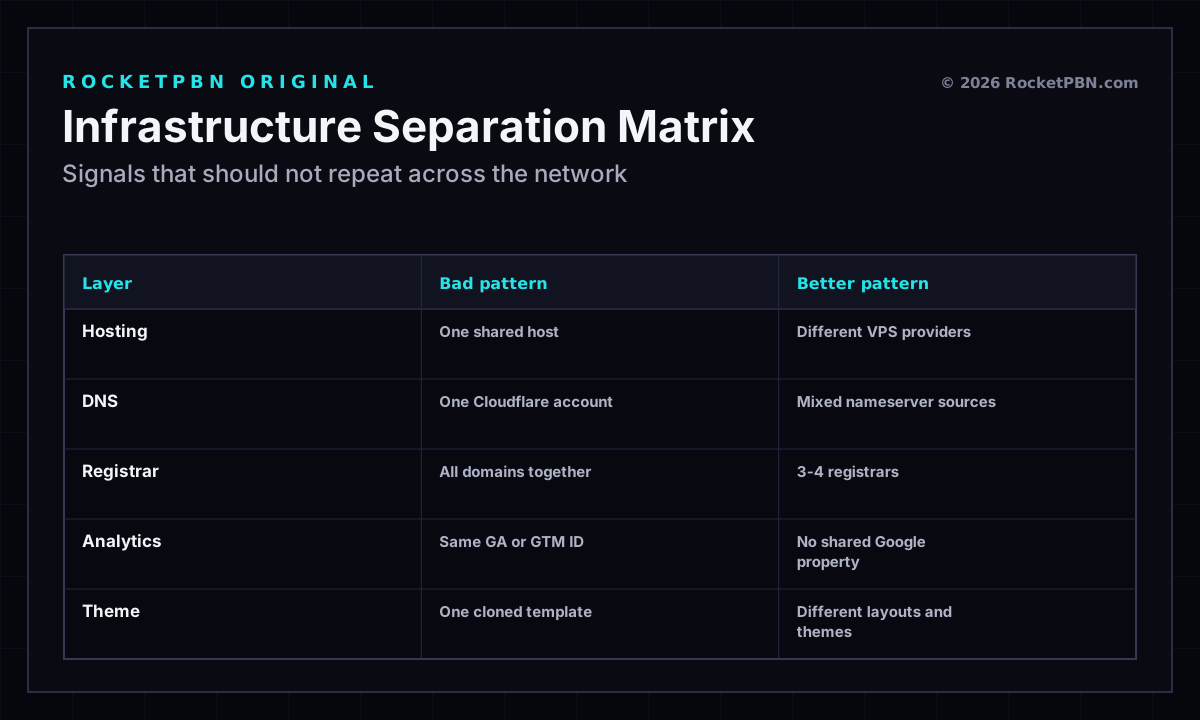
La couche hosting est l'endroit où les opérateurs débutants créent les footprints les plus évidents. Le principe est simple : aucun deux sites du réseau ne doivent partager un signal d'infrastructure corrélable.
Diversification IP
Chaque site PBN doit avoir une IP unique chez un provider distinct ou au minimum un cluster distinct. L'hébergement partagé échoue immédiatement : tous les sites partagent le même environnement ou bloc IP.
| Provider | Prix d'entrée indicatif | Note |
|---|---|---|
| Hetzner | €3.79/mois | EU, bon pour diversité européenne |
| Vultr | $3.50/mois | Multiples régions |
| DigitalOcean | $4/mois | Fiable, distribué |
| Linode/Akamai | $5/mois | Régions globales |
| AWS Lightsail | $3.50/mois | Infrastructure AWS |
| OVH Cloud | $3.50/mois | EU, CA, AU, Asie |
Pour une vraie diversification, utilisez au moins 4 à 5 providers sur le réseau. Un réseau de 20 sites réparti entre DigitalOcean, Vultr, Hetzner, Linode et OVH avec régions US, EU et APAC atteint un plafond pratique de diversité IP.
DNS et nameservers
Chaque domaine doit utiliser des nameservers différents. Si 20 domaines pointent tous vers Cloudflare, cela devient un vecteur de corrélation.
Options possibles :
- Nameservers par défaut du registrar.
- Cloudflare pour certains, Route53 pour d'autres, Gandi pour d'autres.
- DNS self-hosted pour opérateurs techniques.
La règle pratique : ne laissez pas tout le réseau partager la même paire nameserver. Plus le réseau est grand, plus la diversité DNS devient importante.
Diversification registrar
Utilisez au minimum 3 à 4 registrars : Namecheap, Porkbun, Dynadot, GoDaddy ou équivalents. Activez WHOIS privacy partout. Évitez d'avoir toutes les dates d'enregistrement dans la même fenêtre et les mêmes méthodes de paiement sur tous les comptes.
CMS et thèmes
WordPress reste le CMS standard pour PBNs parce qu'il représente une part énorme du web. Le CMS en lui-même n'est pas un footprint. Le footprint vient de la répétition : même thème, même plugins, mêmes auteurs, même structure, mêmes images.
Règles pratiques :
- Un thème différent par site.
- Plugins différents quand possible.
- Pas de même GA4, GTM ou AdSense ID.
- Pas de même author bio sur tout le réseau.
- Pas de footer copyright cloné.
L'erreur la plus coûteuse est d'installer la même propriété Google Analytics, le même container GTM ou le même publisher ID AdSense sur plusieurs sites. Ce sont des IDs corrélables par Google. Pour un link asset, vous n'avez pas besoin de ces données. Supprimez le vecteur.
Quels footprints PBN créent le plus de risque ?
Un footprint est tout attribut partagé qui permet à un crawler, un algorithme ou un reviewer d'identifier que plusieurs sites sont opérés ensemble. Les PBNs ne sont pas détectés parce qu'ils existent comme concept ; ils sont détectés par patterns.
Les 18 vecteurs de footprint
| Catégorie | Vecteurs |
|---|---|
| Infrastructure | Même IP, même /24, nameservers partagés, même compte CDN, même registrar/date cluster |
| On-site | Même thème, même plugin set, même GA/GTM/AdSense, mêmes auteurs, même footer |
| Content | Templates identiques, prompt IA identique, mêmes dimensions d'images, même structure d'articles |
| Behavioral | Inscriptions dans la même semaine, tous les liens sortants vers le même money site, velocity identique |
Gérer ces vecteurs sur 20 sites exige une checklist. Suivez chaque site dans un spreadsheet : registrar, DNS, provider, IP, thème, plugins, authors, date de live, premier money link, anchors utilisées et liens sortants.
Échecs de propriété partagée
Les événements de mapping les plus rapides viennent des propriétés Google partagées :
- Même compte Search Console pour tous les sites.
- Même DNS TXT verification.
- Même GTM container.
- Même GA4 stream.
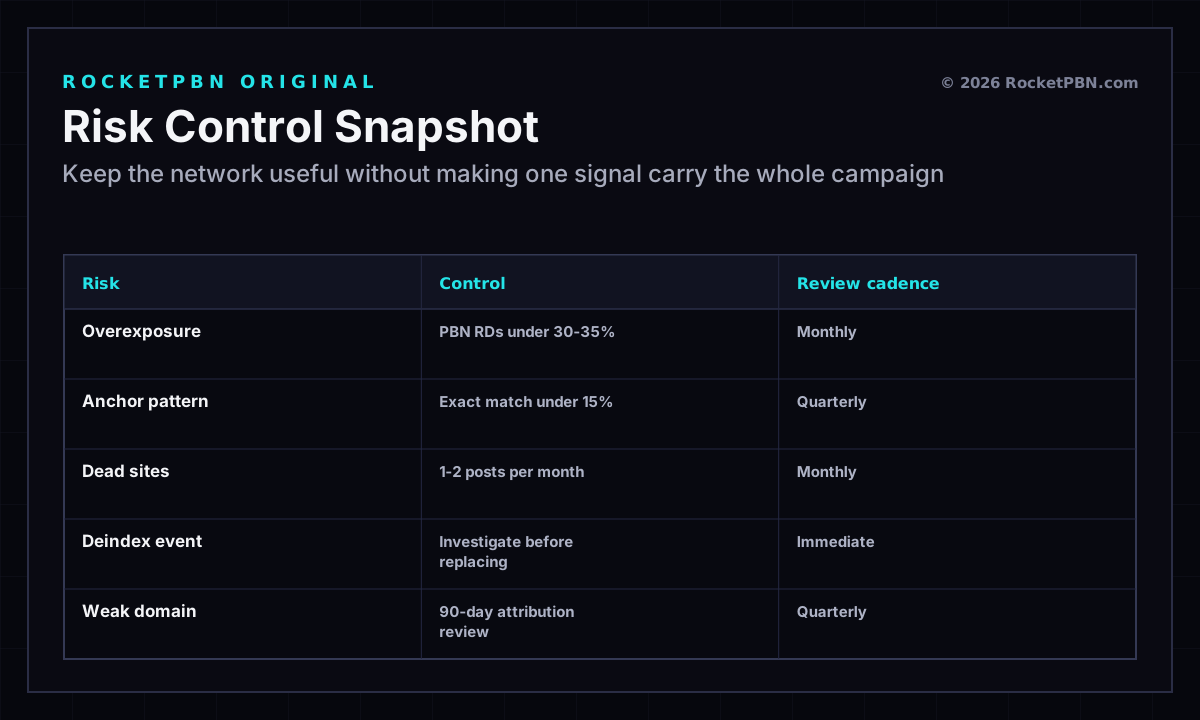
Si vous voulez monitorer les PBN sites dans Search Console, utilisez des comptes séparés ou limitez fortement les groupes. Beaucoup d'opérateurs choisissent simplement de ne pas ajouter les sites PBN à GSC pour réduire la surface.
Quel niveau de contenu faut-il avant le premier lien ?
Un PBN avec contenu mince est détectable et sous-performant. Un site qui lit comme une vraie publication de niche, avec profondeur topicale, updates et structure éditoriale, est beaucoup plus crédible. Le contenu n'est pas une décoration ; c'est l'overhead obligatoire qui rend le lien explicable.
Minimum avant le premier money link
Avant de placer un lien vers le money site, chaque site PBN doit avoir :
- 12 à 15 posts publiés dans la niche originale du domaine.
- Longueur moyenne 600 à 900 mots.
- 2 à 3 posts longs à 1,200+ mots.
- Pages statiques : About, Contact, Privacy Policy.
- Internal linking : chaque post linke 2 à 3 articles liés.
- Indexation confirmée avant déploiement.
Attendez 4 à 6 semaines après mise en ligne avant le premier money link. Un domaine enregistré lundi et qui linke mercredi est un pattern évident.
Contenu IA en 2026
Le contenu IA est acceptable seulement avec édition humaine et détails spécifiques. Un draft de 900 mots peut devenir utile si un éditeur ajoute exemples, données, angles de niche, conclusion réécrite et terminologie correcte. Le contenu brut publié sans revue crée du clustering de style et lit comme un résumé sans expérience.
Le standard pratique : si le post sonne comme un conseil d'opérateur, il peut passer. S'il sonne comme une synthèse générique, il sous-performera.
Cadence et budget
Un site construit avec 12 posts puis abandonné perd progressivement sa crédibilité. La cadence minimale est 1 à 2 nouveaux posts par site par mois.
| Réseau | Cadence minimale | Budget contenu estimé |
|---|---|---|
| 10 sites | 10 posts/mois | ~$200/mois |
| 20 sites | 20 posts/mois | ~$400/mois |
| 50 sites | 50 posts/mois | ~$900/mois |
Traitez ce coût comme fixed operating overhead avant d'acheter le premier domaine.
Comment déployer les PBN links sans créer de problème de velocity ?
L'acquisition de domaines, l'infrastructure et le contenu préparent le terrain. Le déploiement de liens est là où le SEO commence vraiment et où les erreurs de velocity apparaissent.
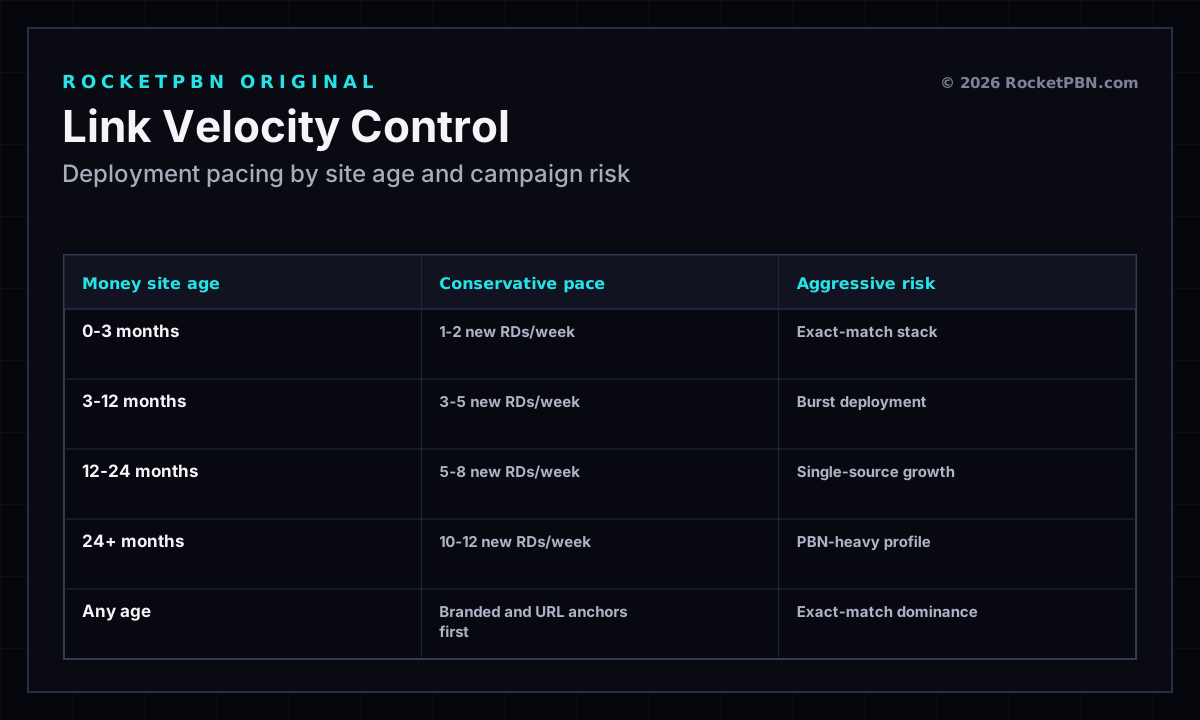
Règles de velocity par âge du money site
La link velocity est le rythme auquel de nouveaux referring domains apparaissent dans le profil du money site. Un spike sans événement de contenu ou PR pour l'expliquer peut créer un signal algorithmique.
| Âge money site | Compétition | Nouveaux RDs/mois sûrs | Max/semaine |
|---|---|---|---|
| 0-3 mois | Faible | 4-8 | 2 |
| 0-3 mois | Haute | 2-5 | 1-2 |
| 3-12 mois | Faible | 10-18 | 4-5 |
| 3-12 mois | Haute | 6-12 | 3 |
| 12-24 mois | Faible | 15-30 | 8 |
| 12-24 mois | Haute | 10-20 | 5 |
| 24+ mois | Toute | 20-50 | 10-12 |
Ce sont des additions de referring domains, pas le nombre total de liens. Trois liens depuis un même PBN domain comptent comme un nouvel RD event, pas trois.
Framework anchor text
L'anchor distribution est la deuxième grande erreur après la velocity.
| Type d'anchor | Part de la contribution PBN | Exemple |
|---|---|---|
| Branded | 35-45% | "RocketPBN", nom de marque |
| URL naked | 15-20% | "rocketpbn.com" |
| Generic | 12-18% | "lire le guide" |
| Partial match | 10-15% | "trouver expired domains SEO" |
| LSI / related | 8-12% | "aged domain authority" |
| Exact match | 5-10% | "acheter expired domains" |
Loggez chaque lien : target URL, anchor, source domain, date, type de page et statut indexation. Si les exact anchors dépassent 15% du profil total du money site, arrêtez les exact-match placements et diluez avec branded/URL.
Contexte de placement
Le meilleur placement est un lien contextuel dans les 600 premiers mots, dans une phrase où l'anchor est naturelle. Écrivez 100 à 150 mots autour du lien. Évitez footer, sidebar, listes "related resources" mécaniques et lien dans le dernier paragraphe sans contexte.
Architecture tier 1 et tier 2
Tier 1 : les sites PBN linkent directement vers le money site. Utilisez seulement des domaines DR 40+, TF ≥ 15 et topical alignment vérifié.
Tier 2 : les liens pointent vers les sites tier 1, pas vers le money site. Le but est de renforcer les pages PBN, accélérer indexation et transmettre de l'equity indirectement.
Commencez tier 2 environ 4 à 6 semaines après indexation des tier 1 links. Ne lancez pas tout en même temps si vous voulez isoler les variables.
Comment mesurer si un PBN fonctionne réellement ?
Beaucoup d'opérateurs regardent uniquement les rankings du money site et supposent la causalité. Cela cache la contribution par domaine, identifie les sous-performers trop tard et rend l'optimisation impossible.
KPIs mensuels
Money site :
- Croissance DR sur 90 jours.
- Nouveaux referring domains ajoutés vs plan velocity.
- Positions des 20 keywords prioritaires.
- Impressions et clicks par page cible.
Sites PBN :
- Indexation via site:domain.com.
- Lien live et dofollow.
- DR et referring domains du PBN site.
- Pages PBN recevant backlinks ou tier 2 support.
Attribution campagne :
- Timeline des liens live.
- Timeline des contenus publiés.
- Mouvements rankings 30 à 45 jours après placements.
Attribution par domaine à 90 jours
À 90 jours après un PBN link, évaluez chaque domaine.
| Signal | Lecture | Action |
|---|---|---|
| Keyword cluster +3 positions | Contribution probable | Maintenir |
| Page linking indexée | Condition minimale | Continuer observation |
| Aucun mouvement | À diagnostiquer | Vérifier anchor, topical fit, tech SEO |
| PBN DR en baisse | Perte d'equity source | Tier 2 ou remplacement |
| Page non indexée | Lien peu utile | Corriger crawl/indexation |
Ne tirez pas une conclusion après 7 jours. Les campagnes PBN doivent être mesurées sur 60 à 120 jours, selon concurrence et fréquence de crawl.
Pull, rebuild ou retire
Retirez le lien si l'anchor contribue à la sur-optimisation ou si un meilleur domaine le remplace. Rebuild le site si le contenu est devenu trop faible ou si l'historique du site peut encore être sauvé. Retirez le domaine si le site est désindexé avec footprint clair, si DR tombe sous 20 après perte majeure de RDs, ou si Wayback a été mal lu au moment de l'achat.
Combien coûte un PBN de 10, 20 ou 50 sites ?
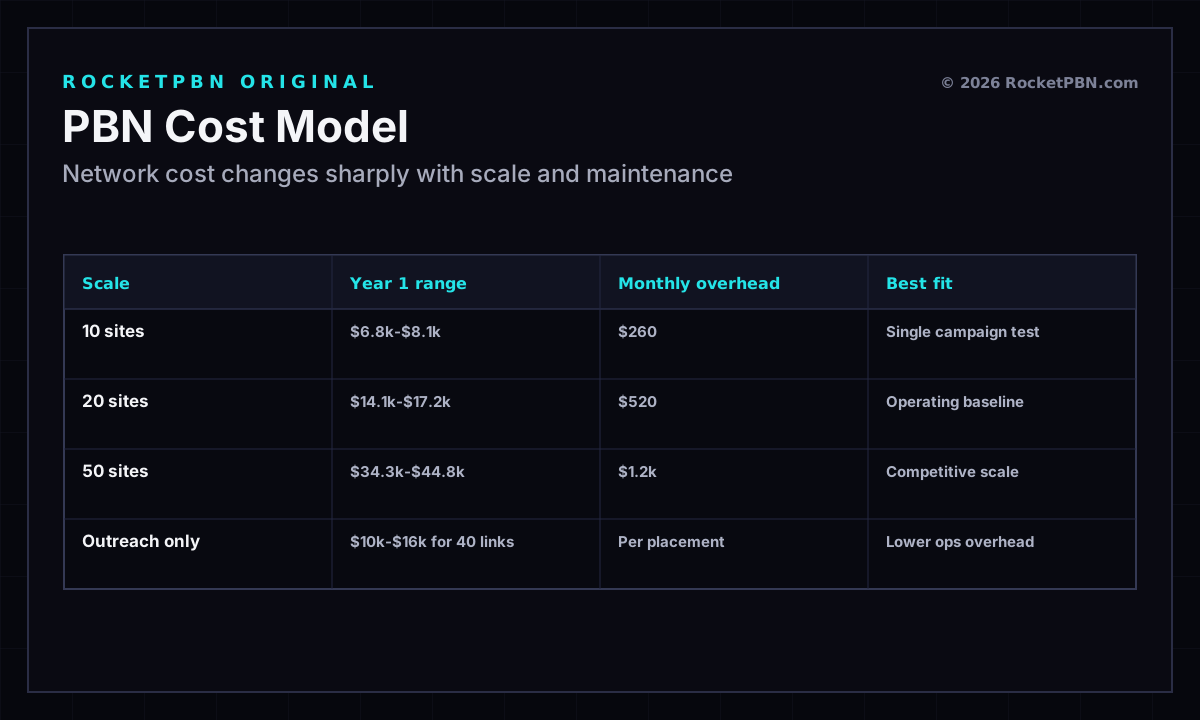
Les coûts varient selon sourcing, contenu et infrastructure, mais les ordres de grandeur aident à décider si l'opération a du sens.
Réseau 10 sites
| Item | One-time | Mensuel |
|---|---|---|
| 10 domaines DR 38-48 | $1,200-$2,500 | - |
| 10 VPS | - | $50 |
| WordPress setup DIY | $0 | - |
| Contenu initial 12 posts x 10 x $20 | $2,400 | - |
| Contenu continu 1 post/site/mois | - | $200 |
| Registrar fees | $120/an | $10 |
Year 1 all-in : environ $6,840 à $8,140.
Réseau 20 sites
| Item | One-time | Mensuel |
|---|---|---|
| 20 domaines DR 40-52 | $2,800-$5,500 | - |
| 20 VPS | - | $100 |
| WordPress setup | $0-$400 | - |
| Contenu initial | $4,800 | - |
| Contenu continu | - | $400 |
| Registrar + WHOIS | $240/an | $20 |
Year 1 all-in : environ $14,080 à $17,180.
Réseau 50 sites
| Item | One-time | Mensuel |
|---|---|---|
| 50 domaines DR 40-55 | $8,000-$18,000 | - |
| 50 VPS | - | $250 |
| Setup + automation | $500-$1,000 | - |
| Contenu initial | $10,800 | - |
| Contenu continu | - | $900 |
| Registrar + tooling | $600/an | $50 |
Year 1 all-in : environ $34,300 à $44,800.
Coût par lien vs outreach
| Méthode | Setup | Ongoing | Total 24 mois | Liens produits | Coût/lien |
|---|---|---|---|---|---|
| PBN 20 sites | $10,000 avg | $520/mois | $22,480 | ~400 contrôlables | ~$56 |
| Niche edits DR 40-50 | $0 | $250/lien | $10,000 | 40 | $250 |
| Guest posts DR 40-50 | $0 | $400/lien | $16,000 | 40 | $400 |
Le calcul sous-estime l'avantage PBN : niche edits et guest posts n'offrent ni permanence certaine, ni contrôle exact d'anchor, ni disponibilité à la demande.
Comment gérer le risque et la recovery ?
La gestion du risque commence par traiter les PBN links comme une composante du système d'autorité, pas comme toute la campagne. Le modèle durable limite l'exposition, contrôle les anchors, maintient la cadence éditoriale et remplace les assets faibles après diagnostic.
Manual action vs filtre algorithmique
Filtre algorithmique : signal automatisé basé sur patterns détectables. Symptômes : rankings chutent à une date, souvent corrélée à un update. Recovery : corriger velocity, anchors ou footprint, puis attendre recrawl et réévaluation.
Manual action : reviewer humain confirme une violation. Symptômes : notification Search Console et chute large. Recovery plus lourde : nettoyage, reconsideration request et attente.
Les PBNs bien construits ne suppriment pas le risque, mais réduisent les patterns évidents qui déclenchent les problèmes.
Règle d'exposition 30%
Les liens provenant du PBN ne doivent pas représenter plus de 30 à 35% des referring domains du money site. Un site avec 120 RDs ne devrait pas dépendre de plus de 40 RDs PBN. Si un réseau est compromis, il reste une base d'equity suffisante pour maintenir et récupérer.
Les profils avec 80%+ de liens PBN prennent un risque structurel que l'absence de footprint ne compense pas. Diversifiez avec outreach dès le troisième mois.
Protocol de désindexation
- Confirmer la désindexation avec site:domain.com.
- Identifier la cause : content quality, footprint, inbound spam ou hosting.
- Si contenu faible : rebuild et resoumettre.
- Si footprint : retirer et remplacer le domaine.
- Si inbound spam : renforcer avec liens propres ou abandonner selon coût.
- Remplacer le lien perdu avec même type d'anchor mais source plus propre.
N'utilisez pas le disavow proactivement sans manual action confirmée. Le disavow retire l'equity. Il ne corrige pas automatiquement le signal algorithmique qui a causé la chute.
Qu'est-ce qui change selon la niche ?
Les guides génériques traitent toutes les niches comme identiques. Elles ne le sont pas. Les seuils qualité, la pertinence thématique et la tolérance au risque changent fortement.
restricted-niche et sports vertical
Niche très compétitive et plus scrutée. Exigences plus strictes :
- DR ≥ 45 pour tier 1.
- Topical TF Sports, News/Media ou Entertainment ; pas Finance ou Business hors sujet.
- Wayback : 3+ ans continus, pas seulement 2 ans.
- Rejet si anciens outbounds vers verticales affiliate non liées.
- Velocity conservatrice : bas de la table, surtout pour sites de moins de 12 mois.
Un domaine sports TF 20 peut mieux soutenir un money site sports vertical qu'un domaine DR 55 business hors sujet.
Finance et investment
Finance est YMYL. Exigences :
- TF:CF ≥ 0.55.
- Topical TF Finance, Business ou Economics.
- Exact anchors à 5-7% maximum pour contribution PBN.
- Moz Spam Score ≤ 5%.
Les domaines finance à DR élevé sont souvent manipulés parce qu'ils se vendent cher. Le ratio TF:CF est le premier filtre défensif.
Health et wellness
Health demande plus de profondeur de contenu. Un PBN health avec 12 posts de 600 mots lit comme thin. Visez 15+ posts à 800-1,000 mots et évitez les domaines avec signaux pharma contaminés.
Local SEO
Le DR peut être plus bas, mais la pertinence GEO compte. Un ancien site news local peut transmettre des signaux géographiques plus utiles qu'un domaine national générique plus fort.
À quoi ressemblent des benchmarks réels ?
Ces benchmarks sont directionnels, pas des promesses. Les variables se chevauchent souvent : liens, contenu, internal linking et crawl peuvent bouger ensemble.
Benchmark 1 : nouveau affiliate, marché émergent
Money site de 11 mois, DR 32, 38 referring domains. Sept expired domains déployés sur neuf semaines, DR 38-49, TF 16-24, TF:CF moyen 0.52, tous avec 65%+ topical alignment. Anchor mix : 3 branded, 2 URL, 1 partial, 1 exact.
Résultat à 90 jours : keyword principal de position 38 à position 9 ; cluster secondaire de pages 3-4 vers pages 1-2. Variable clé : topical alignment. Un test parallèle avec domaines DR similaires mais hors sujet n'a pas produit de mouvement mesurable.
Benchmark 2 : plateau sur marché compétitif
Money site de 22 mois, DR 54, 310 referring domains. Page review bloquée positions 14-20 pendant cinq mois. Intervention : 4 expired domains DR 56-64, TF 26-34, plus 3 niche edits. Sept liens en six semaines, anchors mixtes.
Résultat à 75 jours : page de position 17 à 7. Variable clé : niveau d'autorité source. Les anciens liens DR 38-44 n'avaient pas suffi.
Benchmark 3 : efficacité coût à 18 mois
Réseau de 18 sites construit sur quatre mois : 15 tier 1, 3 tier 2. Coût year 1 environ $13,400. Money site : DR 28 à 41 au mois 6, DR 52 au mois 12, DR 58 au mois 18, avec 23 keywords top 10. Le même volume via niche edits aurait coûté plus cher et offert moins de contrôle d'anchors.
Questions fréquentes avant de construire un PBN
Combien de sites PBN faut-il ?
Pour un money site unique sur keywords modérément compétitifs, 8 à 15 sites tier 1 suffisent souvent pour les 12 premiers mois. Les marchés avec concurrents DR 60+ peuvent demander 20 à 30 tier 1 sites plus niche edits et guest posts.
Combien de temps avant de voir un mouvement ?
Les premiers mouvements peuvent apparaître en 30 à 60 jours sur marchés DR 35-50. Les marchés DR 55-70 demandent souvent 60 à 120 jours. Les marchés DR 70+ exigent 6 à 12 mois de link building cumulatif. Ce sont des benchmarks, pas des garanties.
Est-ce rentable de construire un PBN en 2026 ?
Oui pour les opérateurs qui travaillent sur 12+ mois et acceptent l'overhead contenu/infrastructure. Non pour ceux qui attendent des résultats en 30 jours ou ne veulent pas maintenir les sites. L'économie se défend surtout à 18-24 mois.
Faut-il attendre 30 jours avant de linker ?
Oui. Attendez 4 à 6 semaines après mise en ligne, avec au moins 10 posts publiés et indexation visible. Certains opérateurs attendent 8 semaines pour des tier 1 en marchés compétitifs.
Quelle est la plus grosse erreur des nouveaux opérateurs ?
L'hébergement partagé. Un réseau de 20 sites sur le même host et pointant vers le même money site est lisible comme un pattern d'infrastructure. La deuxième erreur est l'abandon éditorial : un site PBN non mis à jour perd sa crédibilité et devient un asset qui se dégrade.