What Is Topical Trust Flow?
What Is Topical Trust Flow?
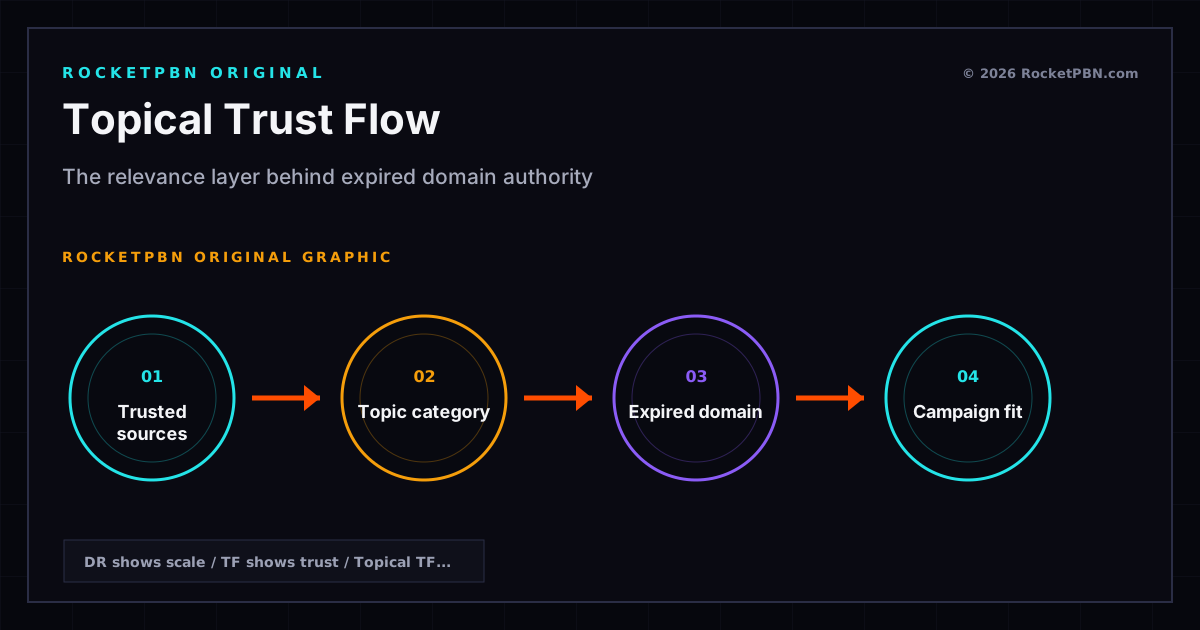
Topical Trust Flow is the metric that tells you what subject a domain's trust belongs to. DR tells you how much backlink strength a domain appears to have. Trust Flow tells you whether that strength comes from trusted link neighborhoods. Topical Trust Flow adds the missing operator question: does this authority match the campaign you are about to run?
That distinction decides whether an expired domain is deployable or just expensive. A DR 45 sports domain with clean Sports Topical Trust Flow can be more useful for a betting campaign than a DR 60 lifestyle domain with scattered Shopping, Society, and unrelated directory trust. The first domain carries a coherent relevance story. The second domain carries a large number that may not support the target entity.
This guide explains how Majestic's Topical Trust Flow works, how to read topical categories, what benchmarks matter before buying expired domains, and how to apply the metric to PBN builds, 301 redirects, and iGaming campaigns. The goal is simple: stop buying domains because the headline metric looks strong, and start buying domains because the authority matches the deployment path.
What Is Topical Trust Flow and Why Does It Matter for Expired Domains?
Topical Trust Flow is Majestic's subject-level trust score for a domain, page, or backlink source. It matters because expired domain authority is not topic-neutral. The strongest domains carry trust from sources that match the rebuild topic, target niche, and outbound link context.
What the Metric Actually Measures
Majestic introduced Topical Trust Flow to add context to raw trust. The normal Trust Flow score estimates link quality based on proximity to trusted seed sites. Topical Trust Flow classifies that trust into subject categories such as Sports, Business, News, Computers, Games, Gambling, Health, and many deeper subcategories.
Majestic's own explanation is that Topical Trust Flow identifies how influential a page or site is within a topic, not merely how strong it is in the abstract. That is why the metric is useful for expired domain buying. You are not buying a generic score. You are buying a historical link graph with a subject attached to it.
Why Expired Domain Authority Is Not Portable Everywhere
When a domain expires, its strongest links do not lose their original context. A link from a sports publication still came from a sports publication. A link from a poker forum still came from a poker forum. A link from a random coupon directory still came from a random coupon directory.
If you rebuild the domain in the same topical lane, the old link graph and the new content reinforce each other. If you rebuild the domain in a different lane, the new site has to explain why the old link graph should still matter.
| Old domain trust source | Rebuild topic | Topical continuity | Operator decision |
|---|---|---|---|
| Sports media links | Sports betting analysis | High | Tier 1 candidate |
| Poker strategy links | Casino comparison site | High | Tier 1 candidate |
| Regional news links | Local betting content | Medium | Use with slower deployment |
| Coupon directory links | Casino affiliate site | Low | Discount or reject |
| School project links | Gambling content | Very low | Reject |
The Fast Operator Rule
Buy the category before you buy the score. If the dominant Topical Trust Flow category does not match the campaign within one or two degrees, the domain should be discounted or rejected even when DR looks strong.
For RocketPBN inventory review, Topical Trust Flow is not a vanity metric. It sits in the buying path after raw authority and before final price. A domain must have enough authority to matter, enough trust to avoid being pure link volume, and enough topical match to support the target campaign.
How Does Majestic Calculate Topical Trust Flow in Practice?
Majestic calculates Topical Trust Flow by combining trust propagation with topical classification across link neighborhoods. The exact algorithm is proprietary, but the practical reading is straightforward: a domain inherits topical trust from the subjects represented by its strongest trusted backlinks.
Trusted Seeds and Link Neighborhoods
Trust Flow starts from trusted parts of the web, then measures how closely other pages sit to those trusted sources through links. Topical Trust Flow adds a subject layer to that process. If trusted tennis, football, racing, or sports news sites link into a domain, the receiving domain can accumulate Sports-related topical trust.
This is also why cheap link volume rarely helps. Thousands of low-quality directory links can raise Citation Flow, but they do not create strong topical trust if those links sit far away from trusted topical neighborhoods.
Domain-Level Versus URL-Level Reading
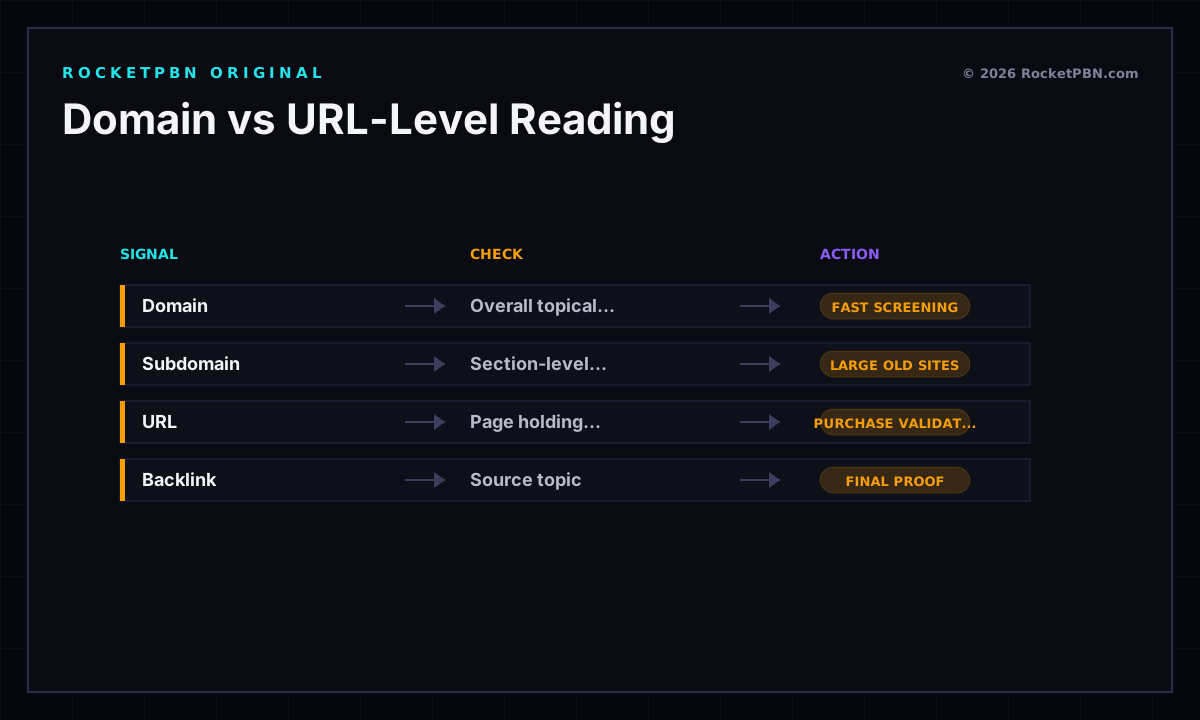
Domain-level Topical Trust Flow is useful for screening, but URL-level Topical Trust Flow is where expensive purchases are won or lost. A domain may show a strong Sports category because one old football statistics page attracted all the good links. If you cannot rebuild that topic or recover the old URL path, the domain-level number overstates the usable value.
Before buying a domain above a serious price point, inspect the strongest linked URLs. Ask three questions:
- Which old URLs received the trusted links?
- What topic did those URLs cover?
- Can the new site rebuild that topic without looking forced?
If the answer to the third question is no, the domain is less useful than the headline number suggests.
Fresh Index Caveat
Majestic data changes as the web is recrawled. A recently dropped domain can lose links, regain links, show different URL-level distributions, or expose old redirects after a fresh crawl. Treat one Majestic snapshot as evidence, not a verdict.
Cross-check Majestic against Ahrefs referring domains, Wayback snapshots, anchor text, language, country mix, and live index status. The domain passes only when the same topical story appears across the evidence chain.
What Topical Trust Flow Benchmarks Should You Use Before Buying?
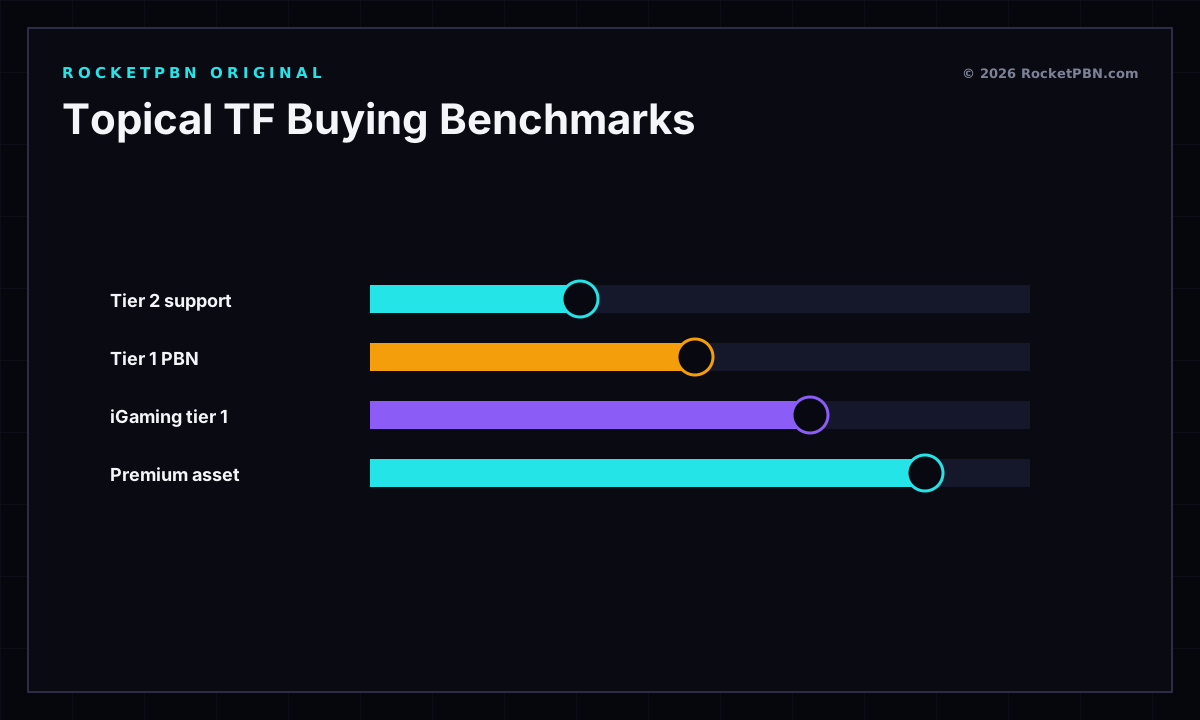
For tier 1 expired domains, target TF 18+, TF:CF above 0.5, and a dominant Topical Trust Flow category that matches the campaign. For competitive iGaming, raise the bar to TF 22+, strong topical dominance, and at least 15 to 20 clean referring domains.
Minimum Thresholds by Deployment Type
Benchmarks should move with the use case. A domain used as tier 2 support can tolerate lower authority. A domain linking directly into a commercial money page needs stronger trust and cleaner topical match. iGaming needs the highest bar because the SERPs are saturated with aggressive link profiles.
| Deployment type | Minimum TF | Preferred TF:CF | Topical alignment | Clean referring domains |
|---|---|---|---|---|
| Tier 2 PBN support | 12+ | 0.40+ | Adjacent category acceptable | 10+ |
| Tier 1 PBN link | 18+ | 0.50+ | Matching category preferred | 15+ |
| iGaming tier 1 | 22+ | 0.55+ | Gambling, Sports, Games, or News bridge | 20+ |
| Premium authority asset | 28+ | 0.60+ | Dominant category matches campaign | 35+ |
When a Lower TF Domain Is Still Worth Buying
A lower-TF domain can be valuable when topical precision is exact, backlinks come from real publishers, and Wayback history is clean. A TF 14 former horse racing blog with links from racing associations, betting columns, and sports media can outperform a TF 24 generic lifestyle domain for a horse racing affiliate.
The reason is precision. Lower volume from the right sources often beats higher volume from sources that do not support the entity you are trying to rank.
When a High TF Domain Is a Trap
High TF becomes misleading when the category mix is incoherent. A domain showing Business, Adult, Shopping, and World across the top topical categories may have been used for redirects, directory spam, or unrelated ownership changes. The score can remain visible while the deployable relevance is weak.
Reject domains where the category set cannot be explained by historical content. If Wayback shows a football news site, Sports and News make sense. If Wayback shows a football news site but Majestic shows Adult, Shopping, and unrelated foreign directories, the backlink profile has been contaminated.
How Should You Read Topical Trust Flow for iGaming Domains?
For iGaming, the best expired domains show Gambling, Sports, Games, Recreation, or tightly related News categories in the top topical positions. Generic authority is not enough because betting and casino campaigns need links from domains already associated with wagering, sports, poker, odds, or gaming content.
Category Fit for Casino Campaigns
Casino campaigns work best with domains that historically covered casino reviews, poker strategy, gambling news, payment methods, bonus analysis, casino regulation, or gaming communities. In Majestic, those domains may surface under Gambling, Games, Recreation, Business, or News depending on the strongest linking sources.
The label does not need to be perfect. The evidence needs to be coherent. If Wayback shows poker strategy and the backlink profile comes from poker blogs, gambling publishers, gaming forums, and casino discussion pages, the domain is usable even if one category label is broad.
Category Fit for Sports Betting Campaigns
Sports betting campaigns usually benefit from Sports, News, Recreation, Regional, and Gambling. A former football analysis blog can be a strong betting support domain if its historical audience, anchors, and linked pages naturally overlap with sports predictions, match previews, odds education, or fan analysis.
This is important for sourcing. Pure gambling domains are more expensive and more contested. Clean sports media domains often produce better price-to-impact because they create a natural bridge into betting without carrying the same obvious auction premium.
iGaming Fit Matrix
| Candidate history | Topical TF profile | Decision | Why |
|---|---|---|---|
| Former tennis news blog | Sports dominant, News secondary | Buy for betting | Strong topical bridge |
| Former casino review site | Gambling dominant, Games secondary | Buy for casino | Exact topical fit |
| Former poker strategy site | Games and Gambling mixed | Buy for casino or poker | Natural continuity |
| Former coupon site | Shopping dominant | Reject or discount | Weak gambling relevance |
| Former school project | Education dominant | Reject for casino | No defensible continuity |
The One-Degree Rule
The best iGaming domains sit within one topical degree of the target. Casino can accept Gambling, Games, poker, payment, and gambling regulation. Sports betting can accept sports journalism, match prediction, racing, football, esports, and odds education.
Two degrees away is usable only with a slower deployment path. Three degrees away is usually a tier 2 asset at best.
How Do You Validate Topical Trust Flow Before Purchase?
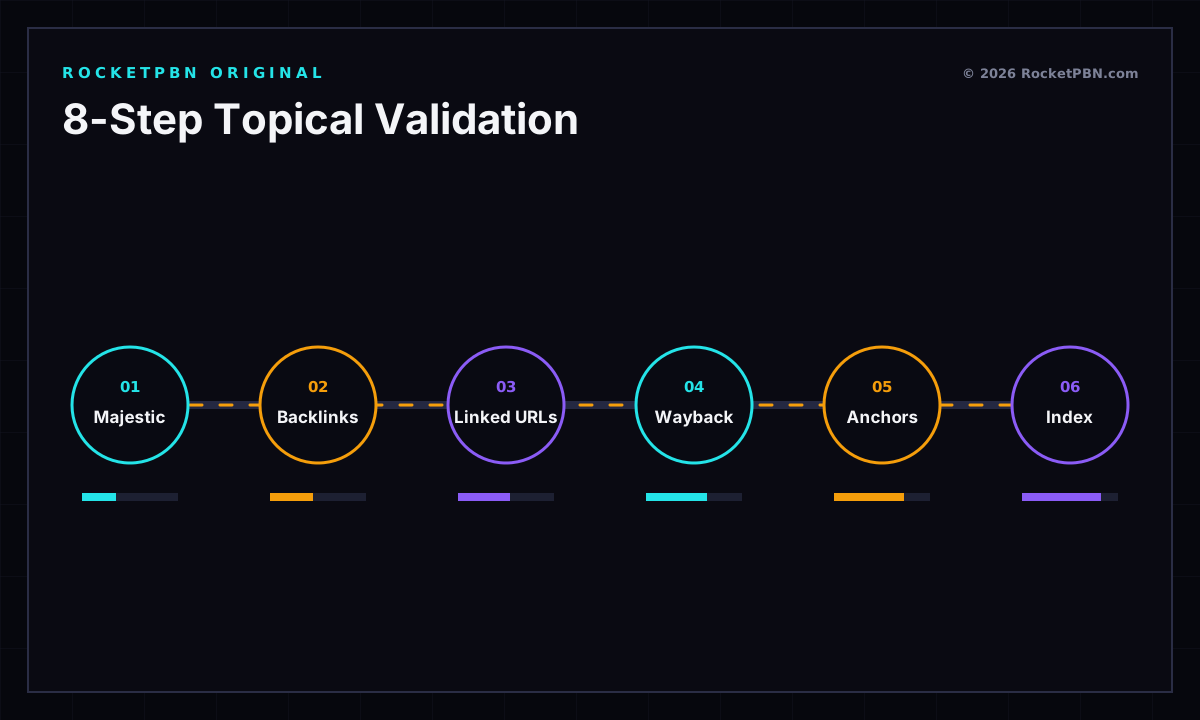
Validate Topical Trust Flow by cross-checking Majestic categories against Wayback history, Ahrefs referring domains, anchor text, linked pages, language, country mix, and Google index status. The category must match the historical site and strongest backlinks, not just appear in one tool.
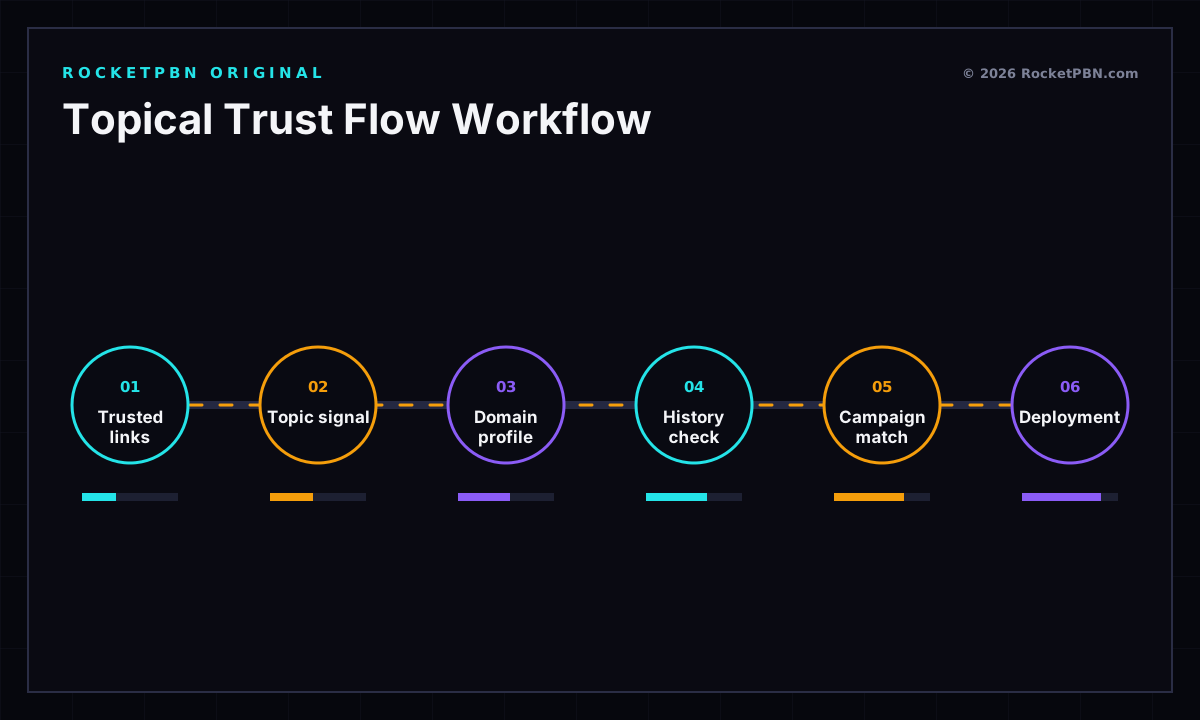
The 8-Step Validation Workflow
- Record Trust Flow, Citation Flow, TF:CF ratio, and top three topical categories in Majestic.
- Open the strongest backlinks and confirm their subjects match the category.
- Export top linked URLs and identify which pages hold most of the authority.
- Check Wayback snapshots for the same years when the strongest links appeared.
- Review Ahrefs anchors for branded, URL, and topical phrases.
- Check referring domain countries and languages for market fit.
- Inspect Google index status for live pages, old snippets, or deindex patterns.
- Price the domain only after the same topical story appears in all evidence sources.
Clean Alignment Pattern
Clean alignment is boring in the best way. Historical content, backlink sources, anchors, categories, and rebuild plan all describe the same subject. A former sports predictions site should have sports anchors, sports backlinks, Sports or Gambling topical trust, and Wayback snapshots showing match previews or prediction content.
When the evidence is that coherent, the domain can be considered for tier 1 use.
Dirty Alignment Pattern
Dirty alignment is fragmented. Wayback shows a local business. Majestic shows Shopping. Ahrefs anchors show casino terms. Referring domains include unrelated directories. Google returns no indexed pages. That domain may still carry visible metrics, but the history is too noisy for a clean authority asset.
Do not rescue noisy domains unless the price is low enough for testing and the domain is isolated from tier 1 campaigns.
How Does Topical Trust Flow Compare With DR, DA, TF, and CF?
DR measures backlink strength, DA estimates comparative domain authority, TF measures trusted link quality, CF measures link volume pressure, and Topical Trust Flow identifies the subject of that trust. For expired domain buying, Topical Trust Flow is the relevance layer that explains campaign fit.
Metric Roles in a Buying Decision
No single third-party metric is enough. Google does not use Majestic or Ahrefs scores directly. Operators use these metrics as proxies for link graph quality, relevance, and risk before paying for a domain.
| Metric | Tool | Best use | Main weakness |
|---|---|---|---|
| DR | Ahrefs | Backlink authority scale | Can rise from irrelevant links |
| DA | Moz | Broad comparison across domains | Less useful for link-level diagnosis |
| TF | Majestic | Quality of trusted links | Needs topical context |
| CF | Majestic | Link volume pressure | High CF can reveal noisy volume |
| Topical TF | Majestic | Subject relevance of trust | Needs manual validation |
| Referring domains | Ahrefs, Majestic, Semrush | Link base stability | Count can include weak sources |
Why DR Alone Misprices Domains
DR is useful for scale, but it is easy to overpay when DR is disconnected from topical relevance. A DR 55 expired domain with weak topical match may look premium in a marketplace table. In deployment, it can behave like a generic link source because the trust signal does not support the target entity.
This is why the buying workflow should move from DR to TF to Topical TF to history. Stop at DR and you are buying volume. Continue to topical trust and you are buying deployable relevance.
Why TF Without Topical TF Is Incomplete
Trust Flow confirms quality but not campaign fit. If two domains both show TF 24, the domain with topical trust in the target niche is more valuable. The other may still pass authority, but the relevance signal is weaker and the anchor posture needs to be more conservative.
Raw TF matters only when the Citation Flow ratio and topical category make sense together.
How Should Topical Trust Flow Shape PBN Deployment?
Topical Trust Flow should decide which money site a rebuilt domain supports, what content goes on the PBN site, what anchors are acceptable, and how quickly links are deployed. A topically aligned domain gives the rebuilt site a cleaner relevance path.
Match Rebuild Content to Historical Trust
A PBN site rebuilt on a former sports domain should publish sports content before it links to a betting page. The topical bridge needs to exist on the rebuilt site, not only inside the old backlink profile. Publish match analysis, team guides, odds education, market explainers, and evergreen sports content.
For casino domains, use casino comparison, poker, payment, bonus structure, regulation, and responsible gambling topics. Do not rebuild a gambling-trust domain as a generic lifestyle blog and expect the relevance story to stay intact.
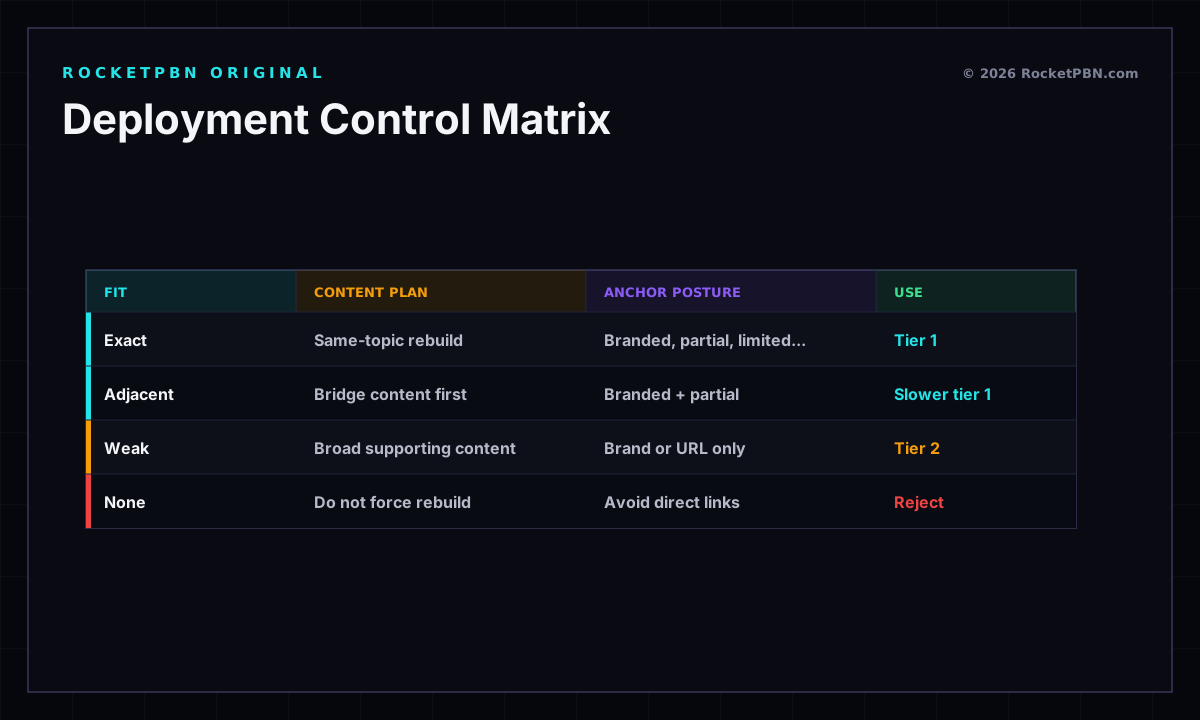
Set Anchor Posture by Category Fit
Exact and partial-match anchors carry more risk when the source domain is topically weak. When the source domain is aligned, anchors look more natural because the surrounding site context supports the destination topic.
| Alignment level | Anchor posture | Deployment note |
|---|---|---|
| Exact category match | Branded, partial, limited exact | Suitable for tier 1 |
| Adjacent category | Mostly branded and partial | Use slower velocity |
| Weak category | Branded or URL only | Better as tier 2 |
| No category fit | Avoid direct links | Do not force deployment |
Feed the Evaluation Checklist
Topical Trust Flow is not a replacement for the full vetting workflow. It feeds into it. Before buying, run the domain through a full evaluation checklist, then map the domain to the right campaign only after history, anchors, referring domains, and index status pass.
For the full purchase process, read the Expired Domain Evaluation Checklist and the Expired Domains for SEO guide.
What Mistakes Do Operators Make With Topical Trust Flow?
Operators misuse Topical Trust Flow when they treat category labels as absolute proof, ignore URL-level authority, buy mixed-category domains because DR is high, or rebuild sites outside their historical topic. The metric works only when validated against history and used in deployment.
Mistake 1: Treating the Top Category as the Whole Story
The top category matters, but the distribution matters too. A domain with Sports 34%, Shopping 28%, Society 20%, and Adult 18% is not a clean sports domain. It is a mixed-history domain with diluted topical trust.
Look for dominant categories, not just present categories.
Mistake 2: Ignoring the Strongest Linked Pages
If all topical authority points to one historical URL, rebuild that page's topic first. A domain whose best links point to an old football statistics page should not launch with only casino bonus content. Recreate topical continuity before placing money links.
Mistake 3: Overpaying for Marketplace Labels
Marketplace filters are starting points, not final due diligence. A listing tagged as sports, casino, or finance may be based on one visible metric, seller judgment, or keyword in the domain. Verify with Majestic, Ahrefs, Wayback, and live index checks.
Mistake 4: Confusing Training Data With Buying Data
Topical Trust Flow is not a ranking factor and not a promise of future rankings. It is buying data. It helps you decide whether an expired domain's trust graph matches the campaign. Use it as a filter, not as a forecast.
| Mistake | Why it happens | Better rule |
|---|---|---|
| Buying high DR with weak topical fit | Marketplace tables sort by DR | Sort by use case first |
| Trusting one category label | Fast screening feels decisive | Validate with Wayback and links |
| Ignoring URL-level authority | Domain metrics are easier to read | Rebuild strongest linked topics |
| Forcing unrelated rebuilds | Operator wants to use a cheap domain | Use as tier 2 or reject |
What Questions Do Operators Ask About Topical Trust Flow?
Is Topical Trust Flow more important than DR?
Topical Trust Flow is more important when two domains have similar authority but different relevance. DR still matters because competitive campaigns need enough link equity. The best buying decision uses both: DR confirms scale, while Topical Trust Flow confirms that the trust belongs to a subject that can support your money site.
What is a good Topical Trust Flow score?
A good score depends on use case. For tier 1 PBN links, look for raw TF 18+ with the dominant topical category matching the target niche. For iGaming, stronger campaigns usually need TF 22+ and a clear Gambling, Sports, Games, or adjacent News profile. Category fit matters more than a universal number.
Can a domain have high Trust Flow but poor topical fit?
Yes. A domain can receive trusted links from sources that do not match your campaign. That domain may still show solid Trust Flow, but if the categories point to Education, Shopping, or unrelated regional content, it is a weak fit for casino, finance, or health campaigns. The link quality exists, but the topical signal is misaligned.
Should I reject domains with mixed topical categories?
Reject mixed-category domains when the history cannot explain the mix. Some legitimate publishers naturally span Sports and News, or Business and Finance. The problem is incoherent mixing: Adult, Shopping, Society, and Computers on a domain that claims to be a sports asset. Mixed categories require deeper history checks and lower pricing.
Does Topical Trust Flow matter for 301 redirects?
Yes. Redirects depend heavily on topical continuity. A redirect from a former sports betting guide to a sports betting brand has a clearer relevance story than a redirect from an unrelated education domain to a casino page. If the topical category is mismatched, the redirect is more likely to transfer weak value or create quality concerns.
What Should You Read Next?
- Expired Domain Evaluation Checklist
- Trust Flow vs Citation Flow
- Domain Authority Metrics Explained
- Expired Domains for iGaming SEO
- Browse pre-vetted aged domains ->
Source notes: Majestic publishes the underlying Flow Metric and Topical Trust Flow concepts in its official Trust Flow, Flow Metric Scores, glossary, and Topical Trust Flow documentation. Treat those sources as metric definitions; treat RocketPBN's benchmarks above as operator-side buying thresholds for expired domain campaigns.