Tiered Link Building Strategy: How It Works in 2026
Tiered Link Building Strategy: How It Works in 2026
Tiered link building is a way to structure authority so stronger, cleaner links support the pages that matter most, while lower-risk supporting links strengthen assets one step away from the money site. Used well, it creates a controlled authority path. Used badly, it becomes a noisy link pyramid with weak pages, spammy anchors, and no clear measurement.
The modern version is not about blasting thousands of links at a tier. It is about deciding which pages deserve direct links, which assets need support, how authority should flow, and how to avoid turning the whole structure into an obvious pattern. For RocketPBN's market, the core asset is not a high-DR claim. It is aged domains with strong referring domains, clean backlink history, and topical context that can support tier 1 placements.
This guide explains tier 1, tier 2, and tier 3 links, where PBN assets belong, how many links each layer needs, what risks appear when scaling, and how tiered strategies apply to restricted-niche campaigns.
What Is Tiered Link Building?
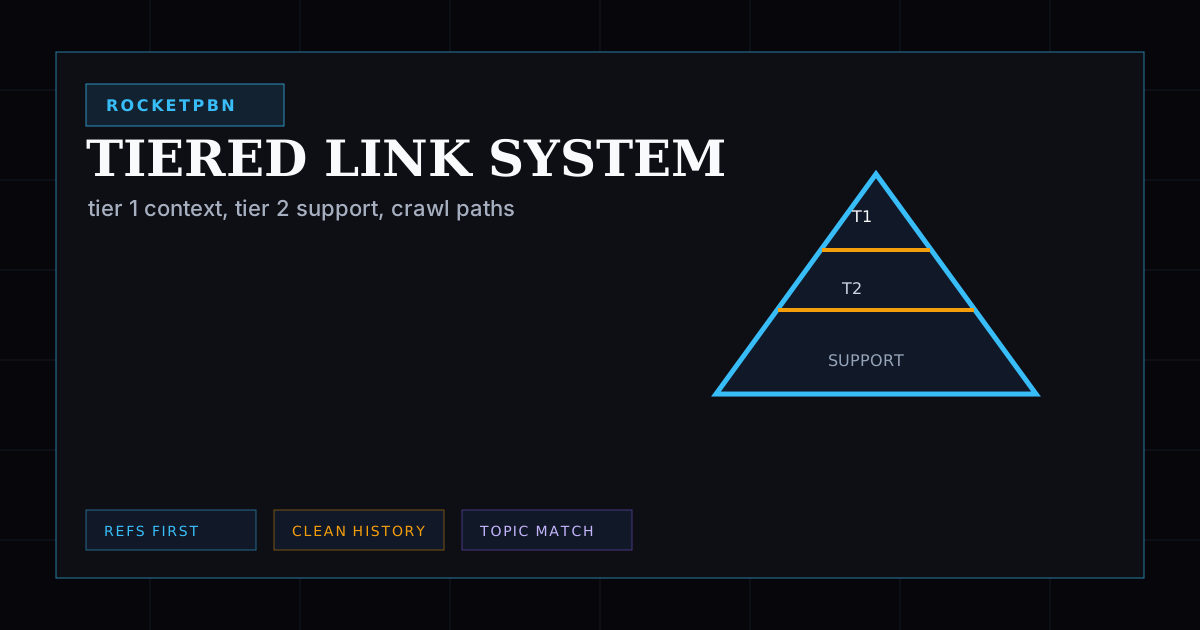
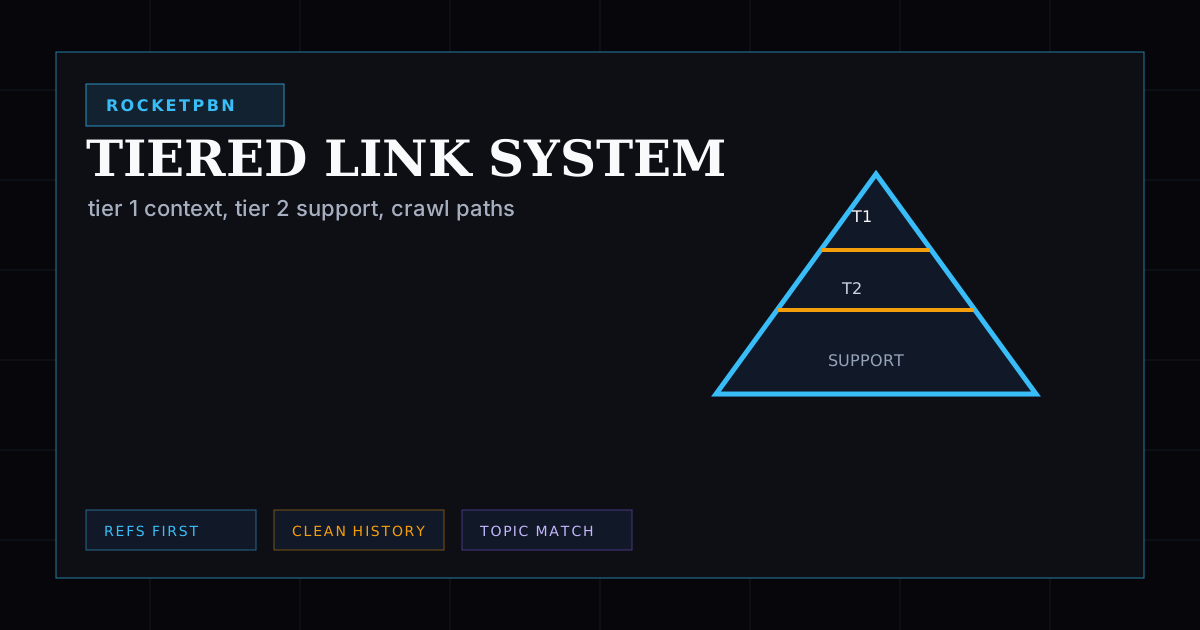
Tiered link building is a backlink structure where direct links support the target page, and secondary links support those direct-link pages. Tier 1 points to the money site. Tier 2 points to tier 1 assets. Tier 3, when used, supports discovery or low-risk amplification.
The Basic Structure
Tier 3 -> Tier 2 -> Tier 1 -> Money page
Tier 1 must be the cleanest layer because it links directly to the money site. Tier 2 can be broader because it supports tier 1 pages. Tier 3 should be used carefully, if at all, because low-quality volume can create noise without useful authority.
Why Tiers Exist
Tiers exist because not every link deserves to touch the money site. A strong aged domain with clean referring domains may be appropriate for tier 1. A weaker citation, social profile, or lower-authority contextual link may be better as support for a tier 1 article.
The structure lets operators separate risk and purpose.
What Tiered Link Building Is Not
It is not a license to automate spam. It is not a reason to point thousands of low-quality links at PBN pages. It is not a replacement for content quality, site architecture, or real topical authority.
The best tiered systems are selective, measured, and easy to explain.
How Do Tier 1, Tier 2, and Tier 3 Links Differ?
Tier 1 links point directly to the money site and require the highest quality. Tier 2 links point to tier 1 assets and can be broader. Tier 3 links support discovery or weak amplification, but they carry the most noise and should be used sparingly.
Tier Comparison
| Tier | Points to | Quality requirement | Typical sources |
|---|---|---|---|
| Tier 1 | money site | highest | aged domains, strong niche edits, editorial posts |
| Tier 2 | tier 1 pages | medium to high | guest posts, citations, social, Web 2.0, niche pages |
| Tier 3 | tier 2 pages | low to medium | indexing support, social mentions, low-risk citations |
The closer a link is to the money site, the stricter the quality standard.
Tier 1
Tier 1 links should come from assets you are comfortable associating with the money site. For PBN campaigns, that means aged domains with useful referring domains, clean history, topical fit, and real rebuilt content.
Tier 2
Tier 2 links strengthen tier 1 pages. They can help a PBN article or guest post get crawled, indexed, and supported. Tier 2 should still be clean enough not to damage the tier 1 asset.
Tier 3
Tier 3 should be conservative. Its role is discovery, not brute force. If a tactic is too weak or spammy to explain, it probably does not belong in the system.
Where Do PBN Links Belong in a Tiered Structure?
PBN links usually belong at tier 1 when the aged domain is clean, topical, rebuilt properly, and backed by useful referring domains. Weaker PBN assets may support tier 2 pages, but poor-quality rebuilt domains should not be used anywhere important.
PBN at Tier 1
Use PBN assets at tier 1 when:
- The domain has live referring domains.
- Backlink history is clean.
- Wayback supports the rebuild topic.
- Trust Flow and TF:CF are acceptable.
- Anchors are natural.
- Hosting and footprint controls are in place.
- The target page is ready.
Tier 1 is where quality matters most. A weak PBN link direct to a money page creates more risk than value.
PBN at Tier 2
Some aged domains are useful but not strong enough for direct money-page links. They can support tier 1 guest posts, niche edits, or PBN articles. This can help those assets get crawled and accumulate more authority.
Do not use tier 2 as a dumping ground for bad domains. If the domain has toxic anchors or spam history, it should be rejected.
PBNs Should Not Interlink by Default
Avoid linking PBN sites to each other unless there is a strong editorial reason. Interlinking controlled assets creates a graph that can reduce the independence of the network.
How Many Links Should Each Tier Receive?
Each tier should receive enough links to support its role without creating unnatural volume. Tier 1 should be selective and slow. Tier 2 can be broader but still relevant. Tier 3 should be minimal and used only when it supports crawl or discovery without adding noise.
Planning Ranges
| Campaign stage | Tier 1 | Tier 2 | Tier 3 |
|---|---|---|---|
| New site | 1-3/month | 3-8/month | optional |
| Growing site | 3-6/month | 8-20/month | limited |
| Competitive campaign | 6-12/month | 20-50/month | selective |
| Aggressive market | measured by test batches | measured by asset behavior | avoid noisy automation |
These are planning ranges, not guarantees. The right number depends on site age, content depth, existing link profile, and competitor velocity.
Support the Right Assets
Tier 2 should support tier 1 assets that deserve help:
- Indexed PBN articles.
- Strong guest posts.
- Niche edits on relevant pages.
- Digital PR pages that mention the brand.
- Informational support pages that link internally to money hubs.
Do not waste tier 2 links on pages that are not indexed or have poor topical fit.
Measure Before Scaling
Add links in batches. Track indexing, crawl, rankings, and target page movement. If tier 2 support does not improve tier 1 visibility or target movement, reassess the asset before adding more volume.
What Risks Appear When Tiered Links Scale Too Fast?
Tiered links become risky when volume grows faster than site authority, anchors repeat, low-quality pages stack together, and every asset points toward the same money page. Fast scaling can make the structure look mechanical and can hide which links actually helped.
Scaling Risks
| Risk | Problem |
|---|---|
| Anchor repetition | pattern across tiers |
| Weak tier 2 volume | noise around tier 1 assets |
| Same sources | obvious vendor footprint |
| Synchronized timing | coordinated link pattern |
| Over-supporting one page | money-page concentration |
| No measurement | cannot identify useful assets |
Scaling should follow evidence. If a test batch works, repeat carefully. If it does not, fix the page or source.
Policy Context
Google's link spam documentation covers links created primarily to manipulate rankings. Tiered structures can fall into that risk zone when the system is built from low-quality links with no user value. The operational response is to keep tier 1 clean, tier 2 relevant, and avoid low-quality automation.
Anchor Control Across Tiers
Use safer anchors on lower tiers. Tier 2 and tier 3 do not need aggressive commercial anchors. Their role is to support assets, not force exact-match signals through every layer.
How Should Tiered Links Be Used for regulated-market Campaigns?
regulated-market campaigns should use tiered links conservatively because publisher supply is restricted and commercial anchors are sensitive. Tier 1 should come from clean topical assets. Tier 2 should support those assets with relevant, crawlable links. Avoid noisy automation around regulated money pages.
restricted-niche Tier Model
| Layer | Example |
|---|---|
| Money page | best regulated sites Canada |
| Tier 1 | aged sports domain article, clean niche edit, regulated-market-friendly publisher |
| Tier 2 | sports guest posts, citations, social mentions, relevant support articles |
| Tier 3 | limited discovery support only |
The key is topical continuity. A sports vertical money page should receive support from sports, regulated, racing, esports, or regulated-market-adjacent assets, not random generic links.
Referring-Domain Strength Matters
For tier 1 restricted-niche support, the aged domain should have strong live referring domains and clean topical history. DR can be shown as context, but the deciding question is whether the referring-domain profile is useful and relevant.
GEO and Market Fit
Country-targeted regulated-market campaigns need market fit. A UK regulated page, Canadian sports publisher page, and Vietnamese-facing regulated resource should not receive the same source mix. Language, market, and topical context should match the target.
How Should a Tiered Link Campaign Be Measured?
A tiered link campaign should be measured by crawl, indexation, tier 1 asset strength, target page movement, and keyword group performance. Do not judge success by raw link count. The goal is authority movement through the structure, not volume.
Measurement Checklist
| Signal | What to track |
|---|---|
| Tier 1 indexation | source pages indexed and stable |
| Tier 2 support | tier 1 pages getting crawled/refreshed |
| Target page movement | keyword group improvements |
| Anchor profile | no over-concentration |
| Referring-domain growth | clean and explainable |
| Conversion path | traffic reaches commercial pages |
Attribution Window
Give links time to crawl and settle. Track:
- Publication date.
- First crawl/index event.
- Target page recrawl.
- Movement at 2-4 weeks.
- Movement at 6-10 weeks.
- 90-day decision.
Competitive restricted-niche campaigns may need longer windows.
Decision Rules
| Result | Action |
|---|---|
| Tier 1 pages index and target improves | repeat measured batch |
| Tier 1 pages fail to index | fix source asset |
| Target does not move | improve page/internal links |
| Anchor risk rises | pause commercial anchors |
| Lower tiers add noise | cut weak sources |
What Questions Do Operators Ask About Tiered Links?
Is tiered link building still used?
Yes, but serious operators use it selectively. The modern version is controlled authority routing, not mass link pyramids. Quality at tier 1 matters more than volume across lower tiers.
Should tier 2 links point to PBN pages?
They can, if the PBN page is indexed, useful, and worth strengthening. Do not point low-quality volume at every PBN article by default. Support only assets that deserve it.
Can tiered links hurt a campaign?
Yes. Poor sources, repeated anchors, fast volume, and obvious patterns can create risk or noise. A tiered campaign should be measured and paused when signals are weak.
Do regulated-market sites need tiered links?
Not always, but tiered support is common because direct publisher supply is restricted. Use it to strengthen clean tier 1 assets, not to bury weak money pages under noisy links.
What Should You Read Next?
- PBN Link Building Strategy
- How to Build a PBN
- Expired Domains for restricted-niche SEO
- Anchor Text Strategy for PBNs
- Browse backlink-led aged domain inventory ->
Which Sources Inform This Guide?
Policy-sensitive sections reference Google Search Central documentation on link spam, spam policies, expired domain abuse, and qualifying paid or sponsored links. Measurement recommendations should be refreshed against current backlink tool documentation and campaign data.